Picture this: It’s a scorching hot summer day, and you bite into the juiciest, sweetest mango you’ve ever tasted. The golden flesh melts in your mouth, and for a moment, you forget all about the heat. Now, what if I told you there’s a city in Pakistan where this experience isn’t just common, it’s practically a way of life? Welcome to Multan, a place so famous for its mangoes that people from all over the world recognize it as the mango capital of Pakistan!
Multan isn’t just any ordinary city. Located in the heart of Punjab province, this ancient city has been growing mangoes for centuries. The relationship between Multan and mangoes is so special that when someone mentions Multan, the first thing that pops into most people’s minds is its incredible mangoes. But what makes Multan’s mangoes so special? Why can’t other cities produce the same quality fruit? And how did this hot, dusty city become synonymous with one of the world’s most beloved fruits?
In this article, we’ll explore the fascinating world of mango cultivation in Multan. You’ll discover why the city’s climate and soil create the perfect conditions for growing exceptional mangoes, learn about the famous varieties that make Multan special, and understand how mango farming has shaped the city’s culture and economy. Get ready to dive into a story that’s as sweet and layered as the mangoes themselves!
The Perfect Recipe: Why Multan’s Climate Is Mango Magic
Think of growing mangoes like baking the perfect cake. You need the right ingredients, the correct temperature, and precise timing. Multan has all three! The city’s climate is like a secret recipe that’s been perfected over thousands of years, creating conditions that mangoes absolutely love.
Multan experiences extremely hot summers, with temperatures often soaring above 45°C (113°F). While this might sound unbearable to us, mango trees thrive in this heat. The intense sunshine helps the fruit develop its characteristic sweetness and rich flavor. It’s similar to how tomatoes taste better when they’re ripened in the sun rather than picked green and ripened artificially. The long, hot summer days give Multan’s mangoes plenty of time to soak up energy and convert it into natural sugars.
But heat alone isn’t enough. Multan also has relatively mild winters and low rainfall, which prevents many of the diseases that can affect mango trees in more humid regions. The soil in Multan is another crucial factor. It’s rich in minerals and has excellent drainage, which means water doesn’t pool around the tree roots and cause rot. This combination of blazing heat, minimal rain, mild winters, and perfect soil creates what farmers call “the Goldilocks zone” for mangoes, not too much of anything, not too little, but just right!
Meet the Stars: Famous Mango Varieties from Multan
If mangoes were celebrities, Multan would be Hollywood! The city produces several varieties that are famous throughout Pakistan and beyond. Each variety has its own personality, flavor profile, and devoted fans. Let’s meet some of these superstars.
Chaunsa is probably the most famous mango to come out of Multan. Named after Sher Shah Suri, who conquered the region in the 16th century (the name comes from “Chausa,” a place where he won a famous battle), this mango is considered by many to be the king of all mangoes. Chaunsa mangoes are medium to large in size, have a golden-yellow skin when ripe, and their flesh is incredibly sweet and aromatic. When you bite into a perfectly ripe Chaunsa, the juice practically drips down your chin! It’s available from July to September, and during peak season, people line up at fruit markets just to get their hands on the best ones.
Another beloved variety is Anwar Ratol, often called the “Queen of Mangoes.” This smaller mango packs an intense flavor punch that’s hard to forget. It’s super sweet, has a distinct aroma, and the flesh is so smooth it almost feels like eating mango-flavored butter. Anwar Ratol season is shorter and comes earlier in the summer, making it a special treat that mango lovers eagerly anticipate each year.
Sindhri mangoes are the giants of the mango world. They’re large, oval-shaped, and have a beautiful golden color when ripe. What makes Sindhri special is its perfect balance of sweetness and slight tartness, creating a complex flavor that keeps you coming back for more. Some Sindhri mangoes can weigh up to half a kilogram each, that’s like holding a small laptop in your hand!
From Tree to Table: The Journey of a Multan Mango
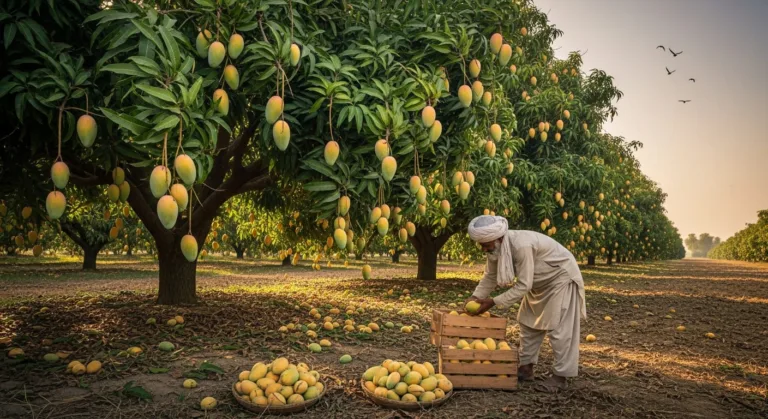
Have you ever wondered what it takes to grow a perfect mango? The journey begins months before you ever taste the fruit. Mango trees in Multan typically bloom between January and March, when small flowers appear in large clusters. These flowers need to be pollinated by insects, especially flies and bees, who visit the blooms looking for nectar.
Once pollinated, tiny green mangoes begin to form. Over the next three to four months, these baby mangoes grow larger, slowly developing the sugars and flavors that will make them delicious. Farmers carefully monitor their orchards during this time, watching for pests, diseases, and weather problems that could damage the crop. It’s like being a guardian to thousands of developing fruits, each one needing attention and care.
Harvesting is an art form in itself. Farmers don’t just randomly pick mangoes when they feel like it. They look for specific signs that indicate ripeness, like changes in skin color, the ease with which the fruit separates from the branch, and even the sound the mango makes when gently tapped (experienced farmers can actually hear the difference!). Mangoes are usually picked slightly before they’re fully ripe, allowing them to be transported without bruising and to ripen perfectly at their destination.
Mango Farming: More Than Just Growing Fruit
In Multan, mango farming isn’t just a business, it’s a cultural tradition passed down through generations. Many families have been cultivating the same orchards for decades, even centuries. These farmers possess incredible knowledge about mango trees, knowledge that can’t be found in any textbook. They understand subtle changes in weather patterns, know exactly when to water and fertilize, and can identify problems with a tree just by looking at its leaves.
The economic importance of mango farming to Multan cannot be overstated. During mango season, the entire city buzzes with activity. Fruit markets overflow with colorful mangoes, export companies work around the clock to ship fruit internationally, and thousands of people find employment in harvesting, packing, and selling mangoes. Resources like Multanfarms.com help connect farmers with buyers and provide valuable information about best farming practices, market prices, and agricultural innovations.
But mango farming also faces challenges. Climate change is making weather patterns less predictable, which can affect flowering and fruit development. Water scarcity is an increasing concern, as mango trees need consistent irrigation, especially during fruit development. Additionally, younger generations sometimes prefer city jobs over the hard work of farming, raising questions about who will maintain these orchards in the future.
Mangoes Beyond Borders: Multan’s Global Reputation
Multan’s mangoes aren’t just famous in Pakistan, they’re enjoyed around the world! Every year, thousands of tons of mangoes are exported from Multan to countries across the Middle East, Europe, North America, and Asia. Pakistani expatriates living abroad eagerly await the arrival of Multan’s mangoes each summer, as they provide a sweet taste of home.
The export process is fascinating and complex. Mangoes destined for international markets are carefully selected for size, appearance, and ripeness. They’re washed, sorted, and packed in special boxes with cushioning to prevent bruising during transport. Some mangoes are even shipped by air freight to ensure they arrive fresh at their destination. It’s like sending precious cargo across the world!
International food critics and mango enthusiasts often rate Pakistani mangoes, especially those from Multan, among the best in the world. This global recognition brings pride to Multan’s farmers and helps support the local economy. When someone in London, New York, or Dubai bites into a Chaunsa mango from Multan, they’re experiencing a piece of Pakistani agricultural heritage.
The Future of Mango Farming in Multan
What does the future hold for Multan’s famous mangoes? Many farmers and agricultural experts are working to ensure that this tradition continues to thrive. New farming techniques are being introduced that use water more efficiently and reduce the need for chemical pesticides. Some orchards are experimenting with organic farming methods, responding to global demand for naturally grown produce.
Technology is also playing a bigger role. Weather stations help farmers make better decisions about irrigation and pest control. Mobile apps connect farmers directly with buyers, cutting out middlemen and increasing profits. Some progressive farms are even using drones to monitor large orchards and identify problems early. It’s like giving traditional farming a modern upgrade!
Education is another key to the future. Agricultural universities and organizations are training young farmers in sustainable practices and business management. Programs that teach both traditional wisdom and modern science are helping create a new generation of mango farmers who can adapt to changing conditions while preserving the quality that makes Multan’s mangoes special.
Celebrating Mango Culture
In Multan, mangoes are celebrated as more than just food, they’re part of the city’s identity. During peak mango season, markets transform into colorful festivals of fruit. Families make special trips to orchards to handpick mangoes fresh from the trees. Traditional recipes passed down through generations come alive as people make mango desserts, drinks, and preserves.
The city even hosts mango festivals where different varieties are displayed, tasted, and judged. These events bring together farmers, buyers, and mango enthusiasts who share their knowledge and passion for this amazing fruit. It’s like a celebration of everything that makes Multan special, all centered around a golden, juicy fruit that captures the essence of summer.
Sweet Conclusions
So why is Multan called the City of Mangoes? As you’ve learned, it’s not just about growing fruit, it’s about the perfect combination of climate, soil, centuries of farming knowledge, and a community that takes immense pride in producing some of the world’s finest mangoes. From the legendary Chaunsa to the aromatic Anwar Ratol, Multan’s mangoes represent the best of Pakistani agriculture and cultural tradition.
The next time you enjoy a mango, especially if it’s from Multan, take a moment to think about the journey that fruit has taken. Consider the farmer who nurtured the tree, the perfect weather conditions that helped it grow, and the rich soil that provided essential nutrients. Every bite connects you to an ancient tradition and a city that has perfected the art of growing exceptional mangoes. Have you ever tasted a Multan mango, and if not, what are you waiting for?