Have you ever touched something so soft and beautiful that you instantly knew it was special? That’s exactly what happens when people first encounter ostrich leather. It’s one of the most talked-about luxury materials in the world, and the prices can genuinely make your jaw drop. So what’s the big deal, and why do people pay so much for it? Let’s find out.
Ostrich leather price is a topic that surprises a lot of people. A single ostrich leather handbag can cost more than a used car. A pair of ostrich leather boots can run anywhere from $500 to $3,000. If that sounds wild, just wait until you understand where all that value comes from.
What Makes Ostrich Leather Different from Regular Leather
Most leather you see every day comes from cows. It’s durable, affordable, and easy to find. But ostrich leather is a completely different story. The biggest thing you’ll notice right away is those little raised bumps on the surface. Each bump marks where a feather once grew, and that pattern is totally unique to ostriches.
Think of it like a fingerprint. No two ostrich hides have exactly the same bump pattern, which makes every product one of a kind. That exclusivity alone drives the price of ostrich leather up significantly. You’re not just buying a wallet, you’re buying something that no one else in the world has an exact copy of.
Beyond looks, ostrich leather is incredibly soft, flexible, and strong. It doesn’t crack or stiffen over time the way cheaper leathers often do. People who buy ostrich products say they last for decades with proper care, which actually makes the high price feel more reasonable when you think about it.
How Ostrich Farming Affects the Cost
Here’s something most people don’t realize. Ostriches are not easy animals to farm. They’re enormous, they can be aggressive, and they require a lot of land, food, and expert care. Raising an ostrich to the age where its hide is suitable for leather takes roughly two to three years.
Compare that to cattle farming, where leather can come as a byproduct of the meat industry. With ostriches, the leather is often the main product, which means the entire cost of raising the bird falls on that one hide. That’s a huge difference in production cost.
South Africa is currently the world’s largest producer of ostrich leather. Oudtshoorn, a small town in South Africa, is basically the capital of the global ostrich leather industry. The farms there have been perfecting the craft for over a century, and the quality they produce is recognized worldwide.
A Quick Look at Ostrich Leather Prices
So what are the actual numbers? Raw ostrich hides (untreated skin before it becomes a finished product) typically sell for $100 to $400 per hide, depending on quality and size. Once that hide goes through tanning, dyeing, and finishing, the price of the material climbs even higher.
Finished ostrich leather products range widely. Here’s a rough idea of what you might see:
- Wallets and card holders: $150 to $600
- Belts: $200 to $800
- Handbags and purses: $500 to $5,000 or more
- Boots and shoes: $500 to $3,000
- Full jackets: $2,000 to $10,000
Luxury brands like Hermès, Gucci, and Louis Vuitton use ostrich leather in some of their most exclusive collections, and those prices can go even higher. It’s the kind of material that signals serious wealth and refined taste.
Why the Tanning Process Adds So Much Value
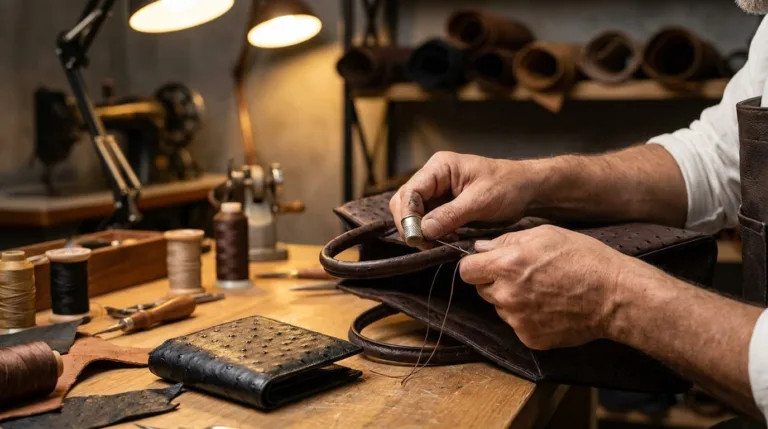
Tanning is the process that turns raw animal hide into usable leather. For ostrich leather, this is a highly skilled process that requires specific techniques to preserve those famous bumps without flattening or damaging them. It’s almost like a form of art.
Imagine baking a cake where the frosting design has to stay perfectly intact through the entire cooling process. One wrong move and the whole design gets ruined. That’s similar to what skilled tanners deal with when working with ostrich hide. The process takes time, expertise, and expensive specialized equipment.
The country where the tanning happens also affects the price. European-tanned ostrich leather, especially from Italy, is often considered the gold standard and commands higher prices than leather processed elsewhere.
Is Ostrich Leather Ethical and Sustainable?
This is a question more and more people are asking, and it’s a really important one. Some animal rights groups have raised concerns about how ostriches are treated on farms. In response, many responsible farms have adopted better animal welfare practices, and certifications exist to help consumers identify more ethically sourced leather.
Sustainability is also part of the conversation. Because ostrich farming uses the entire animal, including the meat and eggs, there’s very little waste involved. Some people argue this makes it more sustainable than farming animals solely for leather. Others prefer to avoid animal products entirely and opt for synthetic alternatives.
The debate is ongoing, but what’s clear is that consumers are paying more attention. Brands that can prove their ostrich leather is ethically sourced are actually seeing higher demand, not lower. People want quality, but they also want to feel good about what they’re buying.
Can You Find Affordable Ostrich Leather?
Yes, actually. Not every ostrich leather product has to break the bank. Smaller items like keychains, coin purses, and card holders made from genuine ostrich leather can be found at more accessible price points. You can also find products made from the leg skin of ostriches, which has a different texture but is still genuine ostrich leather and costs noticeably less.
It’s also worth learning to spot fakes. Some products use embossed cow leather, meaning a machine presses a bumpy pattern onto regular leather to mimic ostrich. The difference is that genuine ostrich bumps are slightly raised and three-dimensional, while fake patterns feel flat and repeated. Knowing this one detail can save you from paying ostrich prices for cow leather.
The Takeaway: Why Ostrich Leather Commands Such High Prices
When you add everything up, the high price of ostrich leather makes a lot of sense. You have rare raw materials, a complex farming process, skilled tanning, a unique one-of-a-kind appearance, and incredible durability. Each one of those factors pushes the price up a little more.
Think of it this way. You can buy a mass-produced print of a famous painting for a few dollars, or you can buy the original. Ostrich leather is the original. It’s irreplaceable, it ages beautifully, and it tells a story of craftsmanship that goes back generations.
So next time you see that price tag on an ostrich leather wallet and your eyes go wide, just remember all the steps that brought that small piece of material into your hands. Does knowing the full story change how you see the price?