Imagine waking up tomorrow and finding out that there’s no bread for breakfast, no roti with your dinner, and no pasta for lunch. Sounds pretty terrible, right? Well, that’s exactly what life would be like without wheat, one of the most important crops in the entire world. In Pakistan, wheat isn’t just another crop growing in fields, it’s the backbone of the country’s food supply and feeds millions of people every single day!
Pakistan is actually one of the top wheat-producing countries on the planet, ranking somewhere between 6th and 8th place globally depending on the year. That’s pretty impressive for a country that’s smaller than the state of Texas! Every year, Pakistani farmers grow enough wheat to fill millions and millions of trucks, and much of this happens in the fertile farmlands of Punjab, where Multanfarms.com operates. But how did wheat become so important in Pakistan, and what does it take to grow this golden grain successfully?
In this article, we’ll explore the fascinating world of wheat farming in Pakistan, from the challenges farmers face to the amazing techniques they use to feed a nation. Get ready to discover why those golden fields you might see driving through the countryside are actually feeding families across the entire country!
The Perfect Climate for Growing Wheat
Here’s something cool: Pakistan’s climate is almost like it was designed specifically for growing wheat! Wheat is what scientists call a Rabi crop, which means it’s planted in the winter season and harvested in spring. In Pakistan, farmers typically plant their wheat seeds between October and December, when the weather starts cooling down after the scorching summer heat.
Think of wheat plants like Goldilocks from the fairy tale, they don’t like it too hot, they don’t like it too cold, they need conditions that are just right! Pakistan’s winter temperatures, which usually hover between 50°F and 70°F (10°C to 21°C), are absolutely perfect for wheat to grow strong and healthy. The plants slowly develop their roots and grow taller during the cooler months, then ripen beautifully when spring arrives in March and April.
The timing couldn’t be better because Pakistan’s weather naturally provides what wheat needs. The monsoon rains come in summer (perfect for rice!), and then the winter months are drier and cooler (perfect for wheat!). It’s like nature created a schedule that lets Pakistani farmers grow different crops at different times of the year. At Multanfarms.com, we’ve learned to work with these natural cycles to produce the best quality wheat possible.
Where Does All This Wheat Actually Grow?
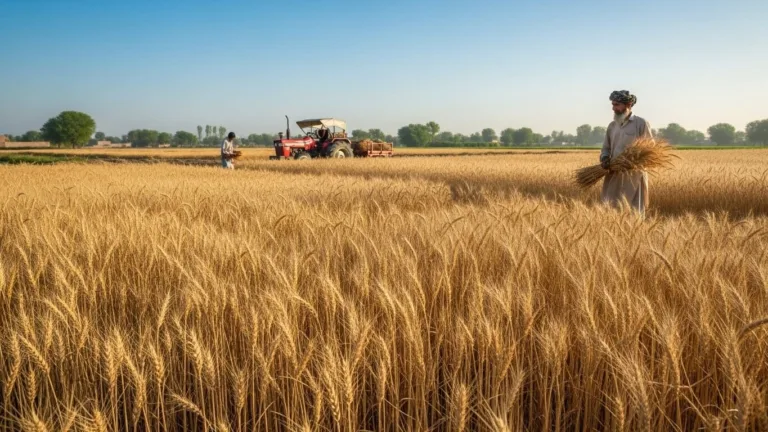
If you could fly over Pakistan in a helicopter during the winter months, you’d see a patchwork quilt of green wheat fields stretching for miles and miles, especially in the province of Punjab. In fact, Punjab produces about 75% of all the wheat grown in Pakistan! That’s like if three-quarters of all the pizza in your town came from just one pizza place.
The secret to Punjab’s wheat success is the Indus River system, one of the longest river systems in Asia. This massive network of rivers and canals brings life-giving water to farmlands across the province. Imagine trying to water your garden with just a watering can versus having a sprinkler system, that’s kind of the difference these irrigation canals make! Areas like Multan, Faisalabad, and Sahiwal have become wheat powerhouses because they have access to this precious water.
But Punjab isn’t the only wheat-growing region. Sindh province also contributes significantly, growing about 20% of Pakistan’s wheat, mostly in districts along the Indus River. Even Khyber Pakhtunkhwa and Balochistan grow wheat, though in smaller amounts. What’s amazing is how farmers in different regions have adapted their techniques to match their local conditions, whether they’re dealing with sandier soil, different water availability, or varying temperatures.
The Journey from Seed to Bread
Let’s follow a wheat seed’s journey from the moment it’s planted until it becomes the roti on your dinner plate! First, farmers prepare their fields by plowing the soil to make it soft and ready for planting. This is like fluffing up a pillow before you go to sleep, you want the soil nice and loose so the tiny wheat seeds can easily send their roots down.
Next comes planting, and this is where modern farming has gotten really clever. Many farmers, including those at Multanfarms.com, now use special machines called seed drills that plant seeds at exactly the right depth and spacing. It’s kind of like those automatic pencil dispensers in class, but for seeds! Getting the spacing right matters because if seeds are too close together, the plants compete for water and nutrients, but if they’re too far apart, you’re wasting valuable farmland.
After planting, the wheat goes through several growth stages. First, tiny green shoots emerge from the soil (this is called germination). Then the plants grow taller and develop more leaves (the tillering stage). Eventually, they produce those classic wheat heads full of grains that you’ve probably seen in pictures. Throughout all these stages, farmers need to water the fields regularly, protect the crops from diseases and pests, and add fertilizers to keep the plants healthy and strong. It’s like being a plant parent for millions of plants at once!
The Big Challenges Pakistani Wheat Farmers Face
Growing wheat in Pakistan might sound straightforward, but farmers actually deal with some pretty tough challenges. One of the biggest problems is water availability. Even though the Indus River system provides water to many farms, there’s not always enough to go around, especially during dry years. Climate change is making this worse by causing unpredictable weather patterns and longer dry spells.
Another challenge is something called wheat rust, a nasty fungal disease that can destroy entire wheat crops if it spreads. Imagine if your entire garden got covered in orange or brown spots that killed all your plants, that’s what wheat rust does! Pakistani scientists and farmers are constantly working to develop rust-resistant wheat varieties that can fight off this disease. It’s like an ongoing battle between the farmers and the fungi!
Pakistani wheat farmers also struggle with rising costs for things like fertilizer, diesel for tractors, and high-quality seeds. Plus, many farmers work relatively small plots of land (5 to 10 acres on average, which is about the size of 4 to 8 football fields). This makes it harder for them to afford expensive modern equipment or invest in new technologies. However, organizations and progressive farms like Multanfarms.com are working to share knowledge and resources with smaller farmers, helping everyone improve their wheat yields.
How Technology Is Changing Wheat Farming
Here’s where things get really exciting! Pakistani wheat farming is going through a high-tech revolution. More and more farmers are using smartphones and apps to check weather forecasts, learn about best farming practices, and even get advice from agricultural experts without leaving their fields. It’s like having a farming teacher in your pocket!
Precision agriculture is another game-changer. This fancy term basically means using technology to farm more efficiently. Some advanced farms now use drones to survey their fields and identify problem areas where plants aren’t growing well. GPS-guided tractors can plant seeds in perfectly straight lines and at optimal depths. Soil sensors can tell farmers exactly when their wheat needs water or nutrients, so nothing gets wasted.
At Multanfarms.com, we’re embracing these modern techniques while still respecting traditional farming wisdom passed down through generations. We’ve found that the best approach combines the old and the new, using time-tested methods alongside cutting-edge technology. For example, we might use a smartphone app to determine the perfect planting date, but we also rely on our experienced farmers who understand the land and can spot problems that no computer could detect.
Why Pakistan’s Wheat Matters to the Whole Country
Let’s talk about why wheat farming is such a huge deal for Pakistan’s economy and food security. Pakistan has a population of over 240 million people (that’s more than two-thirds of the entire U.S. population!), and wheat products make up a massive part of their daily diet. The average Pakistani person consumes about 124 kilograms of wheat per year, which is roughly 270 pounds! That’s like eating your own body weight in wheat if you’re an average-sized adult.
Because wheat is so essential, the Pakistani government keeps a close eye on wheat production and prices. When wheat harvests are good, food prices stay stable and everyone’s happy. But when there’s a bad harvest due to drought, disease, or other problems, wheat prices can skyrocket, making it hard for families to afford basic foods. This is why farms like Multanfarms.com take their responsibility so seriously, we’re not just growing a crop, we’re helping feed a nation!
Wheat farming also provides jobs for millions of people across Pakistan, from the farmers who plant and harvest the crop to the truck drivers who transport it, the mill workers who grind it into flour, and the bakers who turn it into bread and roti. It’s a massive industry that touches almost everyone’s life in some way.
The Future of Wheat Farming in Pakistan
So what does the future hold for wheat farming in Pakistan? Scientists and farmers are working together to develop new wheat varieties that can handle heat better (important as climate change makes temperatures rise), resist diseases more effectively, and produce more grain per acre. Some of these new varieties could increase wheat yields by 20% or more, which would be a huge deal for feeding Pakistan’s growing population!
There’s also a growing focus on sustainable farming practices that protect the environment while still producing plenty of wheat. This includes things like using less water through more efficient irrigation systems, reducing chemical fertilizers by using natural alternatives, and protecting soil health for future generations. At Multanfarms.com, we believe that taking care of our land today means it can keep feeding people for decades and centuries to come.
Young people are also getting more interested in modern agriculture as they see how technology is transforming farming from difficult manual labor into a high-tech, rewarding career. Who knows? Maybe some of you reading this article will become the next generation of innovative farmers who help solve Pakistan’s food challenges!
Your Connection to Pakistan’s Wheat Fields
Every time you eat a piece of bread, a bowl of pasta, or a warm roti, you’re connected to farmers working in fields thousands of miles away (or maybe right in your own region!). Wheat farming in Pakistan is more than just an agricultural activity, it’s a tradition, a livelihood, and a crucial part of feeding one of the world’s largest populations.
The next time you sit down for a meal, take a moment to think about the journey your food made to get to your plate. Behind that simple roti are hardworking farmers, advanced technology, centuries of agricultural knowledge, and the perfect combination of climate and soil that makes Pakistan such an ideal place for growing wheat. Pretty amazing when you think about it, right? So here’s a question for you: how can we all help support farmers and make sure everyone has access to healthy, affordable food in the future?