Imagine biting into a sweet treat that’s been made the same way for hundreds of years, a dessert so special that people travel across countries just to taste the authentic version. That’s exactly what Irani Sohan Halwa is all about! This golden, glossy confection isn’t your typical candy bar or chocolate chip cookie. It’s a traditional sweet that tells a story of culture, craftsmanship, and incredible flavor.
If you’ve never heard of Sohan Halwa before, you’re in for a treat (pun totally intended!). This amazing dessert comes from Iran and has become beloved in many parts of South Asia, especially in Pakistan. It’s got a texture that’s somehow crunchy and chewy at the same time, a rich buttery flavor, and it’s packed with nuts that give it an extra special crunch. Think of it as the fancy cousin of your everyday candy, but way more interesting!
In this article, we’re going to explore everything about Irani Sohan Halwa, from its fascinating history to how it’s made, why it tastes so incredible, and where you can find the real deal. Whether you’re a foodie who loves trying new things or just someone with a serious sweet tooth, you’re about to discover why this traditional treat has fans all around the world.
The Amazing Origin Story of Sohan Halwa
Every great food has an origin story, and Sohan Halwa’s is pretty cool! This sweet delicacy originally comes from Qom, a city in Iran. Legend has it that skilled Persian confectioners created this treat centuries ago, and the recipe has been passed down through generations like a treasured family secret.
The word “sohan” actually means “brittle” in Persian, which makes perfect sense when you taste it. The halwa part refers to a category of dense, sweet confections popular throughout the Middle East and South Asia. Put them together, and you get a dessert that’s uniquely crispy, sweet, and absolutely addictive!
What’s really interesting is how this Iranian treat made its way to other countries. Travelers, traders, and migrants brought the recipe along ancient trade routes, and it found a special home in Pakistan, particularly in Multan. Today, Multan is actually famous for its own version of Sohan Halwa, which locals have perfected over generations.
What Exactly Is Sohan Halwa Made From?
You might be wondering what goes into making this magical sweet. The ingredients are actually pretty simple, but it’s the technique that makes all the difference. Think of it like pizza, the basic ingredients are flour, cheese, and sauce, but a master pizza maker turns those simple things into something extraordinary!
The main ingredients in traditional Irani Sohan Halwa include:
- Milk and sugar (for sweetness and that smooth texture)
- Corn flour (this is what gives it that special consistency)
- Ghee or butter (tons of it, which creates that rich, melt-in-your-mouth quality)
- Nuts like pistachios, almonds, or cardamom (for flavor and crunch)
- Saffron (this expensive spice gives it a beautiful golden color and unique taste)
- Cardamom (a fragrant spice that adds a warm, slightly sweet flavor)
The magic happens when these ingredients are cooked together for hours, sometimes even an entire day! The mixture has to be stirred constantly over low heat until it reaches the perfect consistency. It’s kind of like making the world’s most complicated caramel, you can’t rush it, and you need serious skill to get it just right.
Why Does It Take So Long to Make?
Here’s where things get really interesting. Making authentic Sohan Halwa isn’t like baking cookies where you pop them in the oven for 15 minutes and you’re done. This is serious business that requires patience, strength, and lots of experience.
The cooking process can take anywhere from 6 to 12 hours of continuous stirring! Why so long? Well, the mixture needs to slowly evaporate all the water content while the sugar caramelizes and the ghee gets incorporated perfectly. If you stop stirring, it’ll burn. If you cook it too fast, the texture won’t be right. It’s like a test of endurance and skill combined.
Master halwa makers, called “halwais,” often have arms like athletes from all that stirring. They know exactly when the halwa has reached the perfect consistency just by looking at it and feeling the resistance as they stir. This knowledge comes from years of practice, often learned from their parents or grandparents who were also halwais.
The Texture That Makes Everyone Go Wow
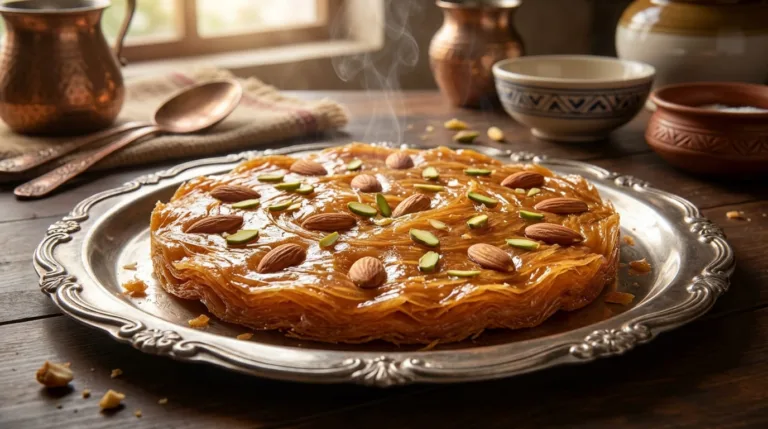
One of the coolest things about Irani Sohan Halwa is its unique texture. It’s not quite like anything else you’ve probably tried before. When it’s fresh, it has this amazing glossy appearance, almost like it’s been polished. The surface is smooth and shiny, catching the light in a way that makes it look almost too pretty to eat.
When you bite into it, here’s what happens: the outer layer gives a slight crisp, then you hit a chewy, almost fudge-like middle layer, and throughout, you get crunches of nuts. It’s a texture adventure in every bite! Some people compare it to a really fancy, Middle Eastern version of toffee or brittle, but that doesn’t quite capture how special it is.
The temperature also affects the texture. When it’s warm, Sohan Halwa is softer and more pliable. As it cools down, it becomes firmer and more brittle (remember, “sohan” means brittle!). That’s why some people prefer eating it at room temperature, while others like it slightly warm.
Why Multan’s Version Is Super Famous
While Sohan Halwa originated in Iran, the city of Multan in Pakistan has become legendary for producing some of the best versions of this sweet treat. In fact, if you ask many people in Pakistan about Sohan Halwa, they’ll immediately think of Multan!
Multan’s halwa makers have refined the recipe over generations, adding their own special touches while respecting the traditional methods. The city’s hot, dry climate actually helps in the preparation process, and many families there have been making halwa for so long that it’s practically in their DNA.
This is where Multanfarms.com comes in! They connect you with authentic Multani Sohan Halwa made using traditional recipes and methods. Instead of getting mass-produced sweets that just don’t taste the same, you can get the real deal, the kind that’s been stirred for hours by experienced halwais who know exactly what they’re doing.
When Do People Eat Sohan Halwa?
You might be thinking, “Okay, this sounds delicious, but when would I actually eat this?” Great question! In South Asian and Middle Eastern cultures, Sohan Halwa isn’t just an everyday snack (though some people do enjoy it regularly). It’s often saved for special occasions.
People buy Sohan Halwa for festivals like Eid, weddings, and other celebrations. It’s a popular gift to bring when visiting friends and family, kind of like bringing a fancy box of chocolates, but way more impressive. Imagine showing up to your friend’s house with a beautiful box of golden, nut-studded Sohan Halwa, you’d definitely be the favorite guest!
It’s also common to offer Sohan Halwa to guests as a sign of hospitality. In many cultures, serving good food to visitors is a way of showing respect and welcome. Offering someone a piece of high-quality Sohan Halwa is like saying, “You’re important to us, so we’re sharing something really special with you.”
How to Spot the Real Deal vs. Fake Stuff
Unfortunately, not all Sohan Halwa is created equal. With anything popular and delicious, there are always cheaper imitations that just don’t measure up. Here’s how to spot authentic, high-quality Sohan Halwa:
Good Sohan Halwa has a rich, deep golden color that comes from real saffron and hours of careful cooking. If it looks pale or has an artificial orange color, that’s a red flag.
The texture should be firm but not rock-hard, and it should break with a clean snap, not crumble into dust. When you bite it, you should taste butter, not oil or strange artificial flavors.
Real Sohan Halwa is loaded with actual nuts, not just a few scattered pieces for show. You should see and taste plenty of pistachios, almonds, or whatever nuts are used in that particular variety.
It should have a complex flavor profile, with notes of butter, caramel, cardamom, and nuts all working together. If it just tastes like plain sugar, it’s not the real thing.
Making the Most of Your Sohan Halwa Experience
If you’re lucky enough to get your hands on authentic Irani Sohan Halwa, here are some tips to enjoy it fully:
Store it properly! Keep it in an airtight container in a cool, dry place. While it doesn’t need refrigeration, you want to protect it from moisture, which can make it sticky and change the texture.
Serve it in small pieces. This isn’t like a chocolate bar where you chomp down a whole piece. Sohan Halwa is rich and sweet, so a little goes a long way. Cut it into small squares or rectangles.
Try it with tea or coffee! The slight bitterness of these drinks balances perfectly with the sweetness of the halwa. Many people in South Asia enjoy their afternoon tea with a small piece of Sohan Halwa on the side.
Why This Traditional Sweet Still Matters Today
In a world full of mass-produced candy bars and factory-made desserts, there’s something really special about a treat that’s still made the old-fashioned way. Sohan Halwa represents tradition, craftsmanship, and cultural heritage all wrapped up in a delicious package.
When you eat authentic Sohan Halwa, you’re not just enjoying a sweet snack. You’re tasting history, experiencing a recipe that’s been perfected over centuries, and supporting artisans who’ve dedicated their lives to mastering this craft. It’s a connection to the past and to cultures that value patience, quality, and doing things the right way, even if it’s harder.
Plus, let’s be honest, it’s just really, really tasty! Whether you’re trying it for the first time or you grew up with it as a special treat, there’s nothing quite like that perfect combination of crunchy, chewy, nutty sweetness.
So next time you’re looking for something special, whether it’s for a celebration or just because you want to try something amazing, consider getting some authentic Irani Sohan Halwa. Places like Multanfarms.com make it easy to get the real thing, made with traditional methods and genuine ingredients. Your taste buds will thank you, and who knows? You might just discover your new favorite treat! What traditional sweet from your own culture would you compare to Sohan Halwa?