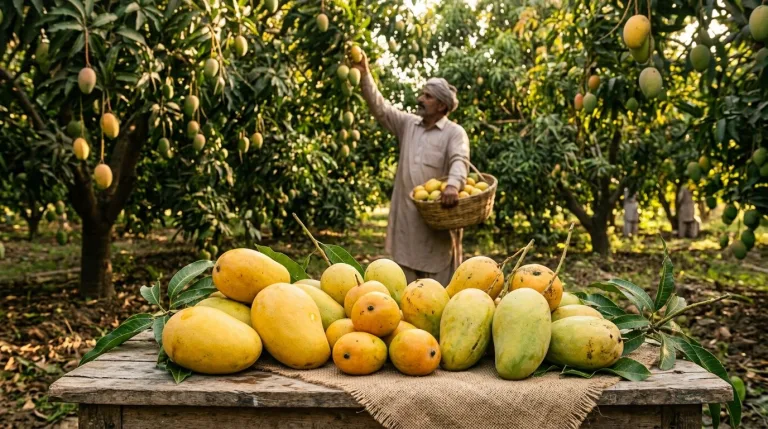
Walk through any market in Pakistan between May and August, and you’ll understand immediately why people here take mangoes so seriously. Crates are stacked head-high, vendors shout out variety names like they’re announcing celebrities, and buyers inspect fruit with the same intensity they’d give a major purchase. Pakistan grows over 200 varieties of mangoes, more than almost any other country on the planet.
But out of all those varieties, a handful rise to the top every single year. Some win on sweetness. Some win on texture. Some have a loyal regional following so fierce it borders on tribal pride. This article takes you through Pakistan’s most popular mango varieties and explains what makes each one distinct.
Why Pakistan Produces So Many Outstanding Mango Varieties
Before getting into the varieties, it’s worth understanding why Pakistani mangoes have such a strong reputation globally. Pakistan’s mango belt, which runs through southern Punjab and Sindh, sits in one of the hottest agricultural zones in Asia. Summer temperatures regularly push past 45°C, and mango trees love heat. Extreme warmth drives up the sugar content in the fruit, which is why Pakistani mangoes tend to be noticeably sweeter than varieties grown in cooler climates.
The deep alluvial soil along the Indus plain, soil deposited by river water over thousands of years, is mineral-rich and well-drained. Mango trees that grow in this soil for decades develop complex root systems that pull in nutrients over long periods. A tree growing for 50 or 60 years in a well-maintained orchard will consistently produce better fruit than a younger one, which is why old family orchards are considered genuine assets in Multan and Rahim Yar Khan.
Chaunsa: Pakistan’s Most Celebrated Mango
If you had to name a single variety as Pakistan’s most popular mango, almost everyone would say Chaunsa. It’s the variety exported in the largest quantities, the one Pakistani communities abroad ask for by name, and the one most closely tied to Multan’s identity as the country’s mango capital.
Chaunsa is pale yellow with a thin, smooth skin. The flesh is fiberless, creamy, and almost honey-like in texture. It doesn’t have the slight tang that some other varieties carry. It’s purely sweet, intensely aromatic, and dissolves in your mouth the way a well-made dessert does. There’s a reason it’s won international awards and gets shipped to markets in the UK, UAE, and North America every single summer.
The season for Chaunsa runs from mid-July into August, making it a late-season variety. By the time it arrives in the market, the early-season mangoes are already done, and the arrival of a fresh Chaunsa crate is treated like an event.
Sindhri: The King of Sindh
Sindhri is the variety that Sindh answers back with whenever Punjab claims mango supremacy. It’s one of the largest mangoes grown in Pakistan, bright golden-yellow when fully ripe, and has a smooth, fiberless flesh with a flavour that balances deep sweetness and a very mild tang. Many people consider it the most balanced mango Pakistan produces.
What makes Sindhri especially popular is its consistency. It’s a reliable variety that performs well year after year, ripens evenly, and holds its shape better than many other varieties after being cut. That makes it the go-to choice for mango desserts, especially mango cream, mango lassi, and mango cake, and its firm flesh also ships well, which is why it appears reliably in supermarkets and exported produce sections.
Sindhri arrives earlier than Chaunsa, generally between May and July, and its large size means one fruit goes a long way. If you’re making a dish that calls for a lot of mango pulp, Sindhri is the practical, flavourful choice.
Anwar Ratol: Small in Size, Legendary in Status
Anwar Ratol is proof that the best things often come in small packages. This variety is considerably smaller than Chaunsa or Sindhri, but its flavour intensity is extraordinary. The sweetness is concentrated into a dense, almost caramel-like pulp with practically no fibrous texture. Skin is thin, the colour is a deep orange-yellow, and the aroma when you peel one is strong enough to fill a room.
This variety gets its name from Ratol, a village near Baghpat, and the version grown in Pakistan’s Rahim Yar Khan belt has developed its own distinct character over generations of farming. Anwar Ratol has a short season, typically only three to four weeks in July, which makes it highly sought after and often more expensive per kilogram than larger varieties.
People who grew up eating it will fly back to Pakistan just to catch the season. That’s not an exaggeration.
Other Varieties That Deserve Recognition
Pakistan’s mango world doesn’t stop at three varieties. Several others have earned loyal followings:
- Langra is a Punjab favourite with a slightly tangy sweetness and a distinctive green skin that stays green even when fully ripe. It’s widely used for fresh juice, shakes, and aam panna, a refreshing summer drink.
- Dussehri is long, slender, and highly aromatic. Grown widely in southern Punjab, it has a rich flavour and is often eaten fresh as a quick snack.
- Fajri is the variety that extends mango season into late August and September when everything else is done. It’s larger and milder in sweetness but fills the gap when the summer’s other varieties have run out.
- Sufaid Chaunsa, also called White Chaunsa, is a lighter, less intensely sweet cousin of the regular Chaunsa that appeals to those who find the original too rich.
The variety you tend to reach for first often depends on where in Pakistan you grew up, which makes this a genuinely personal topic for most families.
How to Know When a Pakistani Mango Is at Its Best
Buying mangoes at the right time matters as much as choosing the right variety. Each variety has a specific window of peak quality, and buying outside that window usually means getting fruit that was harvested too early for transport, which never fully develops its natural sweetness.
As a general guide:
- May to June: Sindhri and early Langra hit the market
- June to July: Anwar Ratol, Dussehri, and Langra peak
- July to August: Chaunsa arrives and dominates
- August to September: Fajri and late-season varieties close out the summer
A ripe Pakistani mango should yield very slightly to gentle pressure, smell distinctly fruity near the stem, and feel heavy for its size. An under-ripe mango stored at room temperature will continue to ripen over two to three days, while a refrigerated mango stops ripening and can lose its sweetness in the cold.
Conclusion
Pakistan’s most popular mango is Chaunsa by most measures, but the real answer depends on who you ask, where they’re from, and which season they’re standing in. Sindhri wins on versatility. Anwar Ratol wins on intensity. Chaunsa wins on sweetness across the board. The fact that Pakistan produces all three, along with dozens of other remarkable varieties, is what makes this country’s mango culture unlike anything else in the world.
For more agricultural stories and food knowledge rooted in the Multan region, visit Multanfarms.com.