If you’ve ever bitten into a ripe Chaunsa on a hot summer afternoon, you already know the answer. There’s nothing quite like a Pakistani mango. Fragrant, golden, and sweet in a way that’s difficult to describe without actually tasting it, the mango isn’t just a fruit in Pakistan. It’s a season, a celebration, and a source of national pride all rolled into one.
Pakistan officially recognizes the mango as its national fruit, and that distinction is well earned. The country is consistently ranked among the top five mango-producing nations in the world, and the varieties grown here are considered some of the finest on earth. From the orchards of South Punjab to the markets of Karachi, mangoes shape the summer identity of this country in a way no other fruit can.
In this article, we’ll explore why the mango holds this prestigious title, what makes Pakistani mangoes unique, which varieties you should know about, and why Multan sits at the very center of this story.
A Fruit With Ancient Roots
The mango isn’t a newcomer to this part of the world. It has been cultivated in South Asia for over 4,000 years, making it one of the oldest cultivated fruits in human history. The Mughal emperors were famously devoted to mangoes. Akbar the Great is said to have planted over 100,000 mango trees in an orchard called Lakhi Bagh, and the fruit was a fixture of royal courts across the subcontinent.
When Pakistan came into being in 1947, it inherited not just the land but also this deep horticultural legacy. The fertile plains of Punjab and Sindh, already producing exceptional mango varieties, became the foundation of what would grow into one of the world’s great mango industries.
Today, Pakistan produces around 1.7 to 2 million metric tons of mangoes annually, depending on the season. That output places it alongside giants like India, China, Thailand, and Mexico in global mango production.
What Makes Pakistani Mangoes Stand Apart?
Not all mangoes are created equal, and Pakistani growers will be the first to tell you that. The combination of soil type, climate, and centuries of careful cultivation has produced varieties with flavor profiles unlike anything grown elsewhere.
The alluvial soil of South Punjab, particularly around Multan and Rahim Yar Khan, is deep, well-drained, and rich in the minerals that mango trees need to produce fruit of exceptional sweetness. The intense summer heat of the region, often crossing 45 degrees Celsius, accelerates sugar development inside the fruit, which is part of why Pakistani mangoes taste so concentrated and aromatic.
Beyond soil and climate, Pakistani farmers have also maintained and refined specific varieties over generations, selecting for flavor rather than purely for yield or shelf life. This focus on taste is something that sets the national fruit of Pakistan apart in global export markets.
The Varieties Every Mango Lover Should Know
Pakistan grows dozens of mango varieties, but a handful have achieved near-legendary status.
Chaunsa is arguably the most celebrated. Named after a town in Punjab, it’s known for its silky texture, minimal fiber, and a sweetness that’s rich without being cloying. The White Chaunsa variety, in particular, has an almost honeyed flavor that makes it a favorite for export.
Sindhri is another giant. Grown primarily in Sindh, this variety is large, oval-shaped, and brilliantly golden when ripe. It has a creamy texture and a distinctly tropical flavor, making it one of the most widely exported Pakistani varieties.
Anwar Ratol is smaller in size but enormous in reputation. Originally developed near Attock, it has an intensely sweet, almost floral flavor and a thin skin. It’s available for a very short window each season, which makes it highly sought after by those who know it.
Other well-known varieties include Langra, Fajri, Sarauli, and Dussehri, each with its own distinct character, ripening time, and regional fan base.
Multan and the Heart of Mango Country
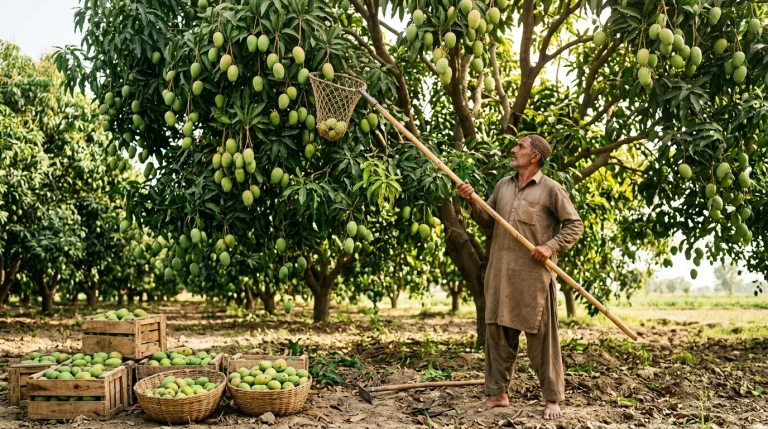
Ask any farmer where Pakistan’s best mangoes come from, and most will point to South Punjab, with Multan at the center. The city and its surrounding districts, including Muzaffargarh, Khanewal, and Rahim Yar Khan, account for a significant share of Pakistan’s total mango production.
Multan’s mango orchards have been cultivated for centuries, and the knowledge of how to grow, prune, irrigate, and harvest these trees has been handed down through generations of farming families. The region’s climate, with long dry summers and mild winters, suits the mango tree’s growth cycle almost perfectly.
Multanfarms.com is rooted in this tradition, connecting consumers with the authentic flavors that come from this land, including mangoes grown the way they’ve always been grown, with patience, knowledge, and deep respect for the fruit.
Mangoes Beyond the Table
The role of Pakistan’s national fruit goes well beyond eating it fresh. Across the country, mangoes are used in a remarkable range of products and preparations.
Aam ka achaar, the spiced mango pickle, is a condiment found in almost every Pakistani household and uses raw, unripe mangoes pickled in mustard oil and spices. Mango chutney is another staple, sweet and tangy, served alongside everything from pakoras to grilled meats. Mango juice and nectar are among Pakistan’s most popular beverages, with brands exporting them to markets around the world.
Nutritionally, mangoes are no slouch either. They’re rich in Vitamin C, Vitamin A, and dietary fiber, and they contain antioxidants that support immune health. Eating a mango in season isn’t just a pleasure. It’s genuinely good for you.
The National Fruit That Earns Its Title
The mango became the national fruit of Pakistan not by accident, but because it reflects something real about the country’s land, culture, and people. It’s a fruit that demands patience to grow, care to cultivate, and real knowledge to bring to its full potential, qualities that Pakistani farmers have demonstrated for centuries.
Whether you’re enjoying a plate of Chaunsa on a summer evening or discovering Sindhri for the first time, you’re tasting the result of generations of farming heritage. If you want to explore more about Pakistani produce, traditional foods, and the farming traditions behind them, visit Multanfarms.com and discover what this land has to offer.