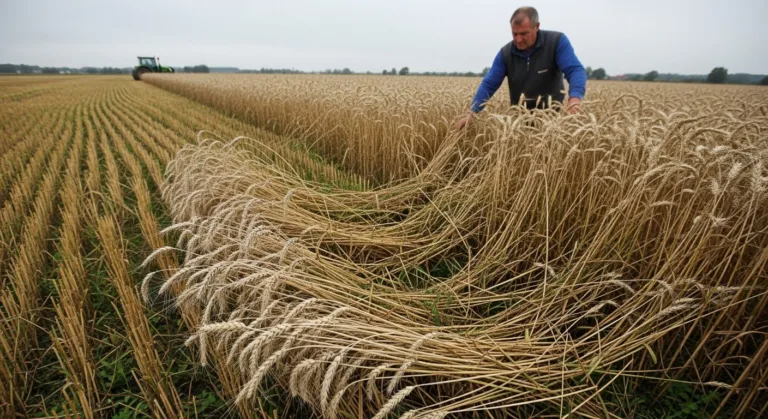
Have you ever seen a field of wheat or corn after a really bad storm? Instead of standing tall and proud like soldiers in a row, the plants might be lying flat on the ground, all tangled up like someone knocked over a tower of building blocks. This isn’t just a messy look, it’s actually a serious problem called lodging of crops. If you’re wondering why farmers get worried when their crops take a tumble, you’re about to find out!
Imagine spending months taking care of your plants, watering them, making sure they get enough nutrients, and then one windy day, everything falls over. That’s basically what lodging is, and it can turn a great harvest into a real headache. In this article, we’ll explore what lodging means, why it happens, and what farmers can do to prevent their crops from doing the “domino effect.”
What Exactly Is Lodging of Crops?
Let’s start with the basics. Lodging is when crop plants bend over or fall down instead of standing upright. Think of it like this: you know how a drinking straw can bend if you push on it from the top? That’s kind of what happens to crop stems when they can’t support themselves anymore.
There are actually two main types of lodging. Stem lodging is when the stem itself bends or breaks, usually somewhere between the ground and the top of the plant. It’s like when a tree branch snaps during a storm. Root lodging happens when the roots can’t hold the plant steady anymore, so the whole plant tips over from the base. Imagine trying to keep a flag standing in soft sand versus hard concrete, the roots are basically the plant’s anchor, and sometimes that anchor just isn’t strong enough.
Why does this matter so much? Well, when crops lodge, they don’t just look bad. They become really difficult to harvest with machines, and the parts of the plant touching the ground can start rotting or getting attacked by diseases. Nobody wants moldy grain!
What Makes Crops Fall Over in the First Place?
You might be thinking, “Why don’t plants just stay standing? They’ve been doing this for millions of years!” Great question! The truth is, several things can cause lodging, and often it’s a combination of factors working together.
Heavy rain and strong winds are the obvious troublemakers. When crops get soaked with water, they become heavier, just like how your clothes feel when you get caught in the rain. Add some gusty winds pushing on those wet, heavy plants, and you’ve got a recipe for disaster. During monsoon season or tropical storms, entire fields can lodge overnight.
Another big factor is too much fertilizer, especially nitrogen. Now, nitrogen is like vitamins for plants, it helps them grow big and strong. But here’s the catch: too much nitrogen makes plants grow really tall with soft, weak stems. It’s like building a super tall tower with spaghetti instead of strong wooden blocks. The plant shoots up so fast that its stem doesn’t have time to develop the strength it needs.
Plant diseases and pests can also weaken stems from the inside out. Some insects bore into the stems and create weak spots, kind of like termites eating away at wooden beams in a house. Certain fungi can attack the lower parts of the stem and make them soft and squishy. When that happens, the plant just can’t hold itself up anymore.
Why Farmers at Multanfarms.com Need to Worry About Lodging
For farmers, lodging isn’t just an annoying problem, it can seriously hurt their income. When crops lodge, harvesting becomes a nightmare. Modern combine harvesters are designed to cut standing crops, not pick up plants lying flat on the ground. It’s like trying to vacuum your floor when everything’s stuck under furniture.
Here’s what happens: the harvesting process takes much longer because machines have to slow down and work more carefully. Sometimes, farmers can’t even use their machines and have to harvest by hand, which costs way more time and money. Plus, a lot of the grain gets left behind in the field because the harvester can’t reach it properly. Imagine dropping half your Halloween candy on the ground and not being able to pick it up, that’s basically the frustration farmers feel!
Quality takes a hit too. When plant heads touch the ground, moisture and soil organisms start breaking down the grain. The seeds might start sprouting right there in the field, or they might develop mold and fungus. Grain buyers don’t want to purchase low-quality crops, so farmers get paid less for their harvest. At Multanfarms.com, preventing lodging means protecting both the quantity and quality of the harvest.
Smart Strategies to Keep Crops Standing Tall
The good news is that farmers have several tricks up their sleeves to prevent lodging. It’s all about being smart and planning ahead, kind of like how you’d prepare for a big test instead of just winging it.
Choosing the right crop varieties is super important. Plant breeders have developed varieties with shorter, stockier stems that are less likely to fall over. These plants are like gymnasts, short, strong, and stable instead of tall and wobbly. They might not look as impressive in the field, but they’re much better at staying upright when the weather gets rough.
Proper fertilizer management makes a huge difference. Remember how we said too much nitrogen can make stems weak? Well, farmers need to find the sweet spot, enough nitrogen to grow healthy crops, but not so much that the plants get too tall and floppy. They also use other nutrients like potassium and silicon that help strengthen the stem walls, kind of like how calcium makes your bones stronger.
Plant spacing and density matter too. If you plant crops too close together, they compete for light and shoot up really tall and thin as they try to reach the sun. It’s like when too many kids crowd around a water fountain, everyone’s pushing and stretching to get to it. Giving plants proper space helps them develop stronger stems.
Weather Watching and Timing Are Everything
Farmers also pay close attention to weather forecasts, especially during critical growth stages. If a big storm is coming when the crops are at their most vulnerable stage (usually when the grain heads are filling up and getting heavy), farmers might apply special chemicals called plant growth regulators. These chemicals are like telling the plant, “Hey, don’t grow so tall! Stay short and strong instead.”
Timing the harvest is another strategy. If farmers can harvest before the worst weather hits, they can avoid lodging altogether. It’s like leaving the party before it gets too crazy, sometimes the smart move is knowing when to make your exit.
Some farmers also use crop rotation and good soil management to keep their soil healthy and well-structured. Strong, well-aerated soil helps roots anchor better, which prevents root lodging. Think of it like building a house, you want a solid foundation, not one that’s all loose and crumbly.
The Bottom Line: Standing Strong Matters
At the end of the day, lodging of crops is one of those challenges that reminds us how tricky farming can be. It’s not just about planting seeds and waiting for them to grow. Farmers need to think about plant genetics, soil health, nutrition, weather patterns, and harvest timing all at once. It’s like juggling multiple balls while riding a unicycle!
For operations like Multanfarms.com, preventing lodging means better yields, higher quality crops, and more profit at the end of the season. But it also means being able to feed more people with the same amount of land, which matters when the world’s population keeps growing.
Next time you’re eating bread, cereal, or anything made from grain, take a second to appreciate all the work that went into keeping those crops standing tall in the field. Have you ever thought about all the challenges farmers face just to get food from the field to your table? It’s pretty amazing when you think about it!