Walk into almost any kitchen in Pakistan and you’ll find a yellow-golden flour tucked somewhere in the pantry. It goes into crispy pakoras, silky halwa, rich curries, and even homemade face packs. This humble ingredient has been feeding families and nourishing skin for thousands of years, and it shows no signs of slowing down. That flour is besan ka aata, and it might just be the most versatile thing in your kitchen.
So what exactly makes besan ka aata so special? Unlike wheat flour, which comes from wheat grains, besan is made entirely from chickpeas. It packs more protein, more fiber, and more nutrients per spoonful than most other flours you’d find on a grocery shelf. By the end of this article, you’ll understand where besan comes from, why it’s so good for your health, and why people have been using it for centuries in ways that go far beyond cooking.
What Exactly Is Besan Ka Aata?
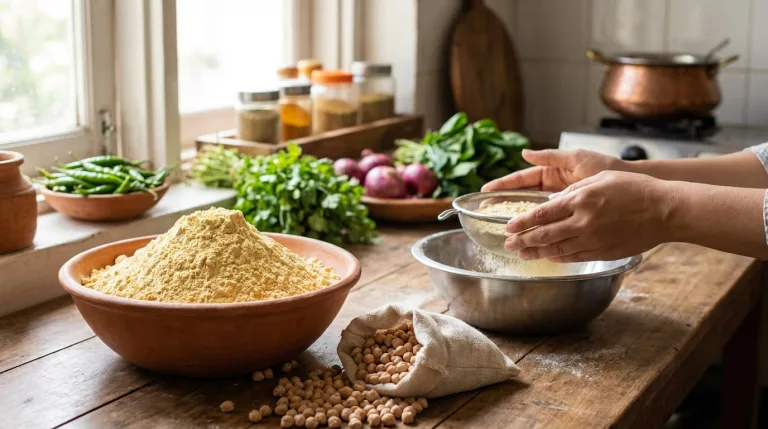
Besan ka aata, which translates directly to “chickpea flour” or “gram flour,” is made by grinding dried chickpeas into a fine powder. The chickpeas used are typically the smaller, darker variety known as desi chana or Bengal gram, rather than the larger kabuli (white) chickpeas you’d use in hummus. The result is a dense, slightly earthy, golden-yellow flour with a faintly nutty smell that’s instantly recognizable once you’ve spent any time in a South Asian kitchen.
What separates besan from regular flour right away is its texture and behavior. It absorbs liquid differently, thickens sauces faster, and creates a crispier coating when used for frying. These unique properties come directly from the chickpea itself, which has a very different nutritional and chemical makeup compared to wheat.
How Is Besan Made?
The process of making besan is straightforward but requires the right variety of chickpeas and a good grind. Desi chana are first dried thoroughly, then sometimes lightly roasted to enhance their nutty flavor before being stone-ground or machine-milled into a fine powder. The resulting flour is then sifted to remove any coarse bits and packed for use.
Some families in rural Pakistan still prepare small batches of besan at home by grinding dried chana on traditional stone mills, known as chakki. The home-ground version often has a slightly coarser texture and a stronger flavor compared to commercially packaged besan. Both versions deliver the same nutritional benefits, but the home-ground variety is widely considered to have a richer, more authentic taste.
Why Is Besan Ka Aata So Good for You?
Here’s where besan really pulls ahead of regular flour. A single cup of besan contains roughly twice the protein of the same amount of wheat flour, making it an excellent choice for people who want to add more plant-based protein to their diet. It’s also naturally gluten-free, which means people who can’t tolerate wheat can use it as a direct substitute in many recipes.
Besan is also rich in key nutrients. Here’s a quick look at what it brings to the table:
- Protein, which supports muscle growth and repair
- Dietary fiber, which keeps your digestive system running smoothly
- Iron, essential for healthy blood and energy levels
- Folate, a B-vitamin that supports cell function
- Magnesium, which helps regulate blood pressure and supports bone health
Because besan has a lower glycemic index than wheat flour (meaning it causes a slower, steadier rise in blood sugar rather than a sharp spike), it’s often recommended for people managing diabetes or watching their blood sugar levels.
Besan in the Kitchen: From Pakoras to Mithai
If you’ve ever eaten a crispy pakora on a rainy afternoon, you’ve already tasted besan at its finest. That golden, crunchy coating that forms around onions, potatoes, and green chilies? That’s besan doing its job. The flour creates a light batter that fries up beautifully, sealing in moisture while developing a satisfying crunch on the outside.
But pakoras are just the beginning. Besan shows up across South Asian cuisine in a surprising number of forms:
- Chana dal karhi, a tangy yogurt-based curry thickened with besan and topped with fried pakora dumplings
- Besan ka halwa, a rich, ghee-laden sweet made by roasting besan until it turns deep golden, then mixing it with sugar and milk
- Ladoo, the classic round sweets made from roasted besan, ghee, and sugar that show up at every celebration
- Sev and besan papdi, crispy snacks made by extruding or rolling besan dough and frying it until crunchy
Besan also works as a natural thickener for gravies and soups, and it binds ingredients together in cutlets and kebabs, doing the job that eggs do in Western cooking.
Besan for Your Skin? Yes, Really
Here’s something that might surprise you: besan ka aata is just as popular in the bathroom as it is in the kitchen. For generations, women across Pakistan and India have used besan as a core ingredient in ubtan, a traditional skin-care paste applied to the face and body. When mixed with a little turmeric, rose water, or yogurt, besan acts as a gentle exfoliator and cleanser.
The flour’s slightly gritty texture buffs away dead skin cells, while its natural absorbent properties soak up excess oil from the surface of the skin. It’s particularly popular as a pre-wedding ritual, where families apply besan-based ubtan to brides to give their skin a brighter, smoother appearance. Unlike commercial scrubs packed with synthetic chemicals, besan is entirely natural and safe for most skin types.
How to Buy and Store Besan Ka Aata Properly
When buying besan, look for a flour that’s a consistent golden-yellow color with no dark spots or unusual clumping. A slight nutty aroma is a good sign of freshness. Avoid bags that have a sour or musty smell, as besan can go rancid if it’s been stored poorly or has been sitting on the shelf for too long.
To store it properly at home, transfer besan into an airtight container and keep it in a cool, dry place away from moisture and sunlight. Stored this way, it’ll stay fresh for up to three months at room temperature. For longer storage, you can refrigerate or freeze it in a sealed container and it’ll keep for up to a year without losing its quality.
A Flour Worth Knowing
Besan ka aata is proof that the most useful things in life are often the simplest. One ingredient, made from a single humble legume, manages to feed you, nourish your skin, and serve as the backbone of some of Pakistan’s most beloved dishes. It’s been doing this quietly for thousands of years, and it’ll keep doing it long after the latest food trend fades.
If you’re looking for fresh, high-quality besan ka aata sourced straight from Pakistan’s agricultural heartland, visit Multanfarms.com and explore a range of natural products that bring the best of local farming right to your door.