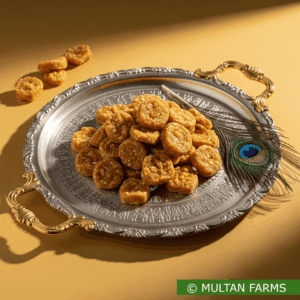
Imagine walking down a bustling street in Pakistan, and suddenly your nose catches the most incredible smell. It’s sweet, warm, and nutty all at once, making your mouth water instantly. You follow the aroma and discover people crowding around a shop, eagerly buying something that looks like golden, glossy candy. That, my friend, is Multani halva, and it’s one of the most famous desserts in all of Pakistan!
If you’ve never heard of halva before, you’re in for a treat (literally). Multani halva isn’t just any ordinary sweet, it’s a dessert with centuries of history, a unique recipe, and a reputation that has spread far beyond the city of Multan. People travel from all over Pakistan just to taste the authentic version of this amazing confection. It’s kind of like how people might drive hours to get the perfect pizza or the best ice cream, except this dessert has been famous for way longer than pizza chains have existed!
In this article, we’re going to explore what makes Multani halva so incredibly special, how it’s made using traditional methods that have been passed down for generations, why Multan became the halva capital of Pakistan, and how places like MultanFarms.com are keeping this delicious tradition alive. Get ready to learn about a dessert that’s been making people happy for hundreds of years!
What Exactly Is Multani Halva?
Let’s start with the basics. Halva (sometimes spelled halwa) is a type of sweet confection that’s popular in many countries across the Middle East, Central Asia, and South Asia. But Multani halva is in a league of its own. It’s made primarily from semolina (a type of wheat flour), sugar, ghee (clarified butter), and milk, all cooked together slowly until it transforms into a rich, caramel-colored treat.
What sets Multani halva apart is the texture and the process. When made correctly, it has this amazing glossy appearance that almost looks like it’s been polished. The texture is unique, it’s dense but somehow still melts in your mouth, kind of like if fudge and pudding had a baby! The taste is intensely sweet with nutty undertones from the ghee and a slight graininess from the semolina that somehow works perfectly together.
Think of making Multani halva like conducting a science experiment where timing and temperature are absolutely critical. If you rush it or use the wrong proportions, you’ll end up with something completely different. That’s why authentic Multani halva, made by experienced halva makers (called halwais), is so prized. These artisans have spent years perfecting their craft, learning the exact moment when the mixture is ready, much like how a master chef knows exactly when a steak is cooked to perfection.
The Secret Behind That Golden Perfection
So what makes Multani halva turn that gorgeous golden color and get that special shine? The secret lies in the cooking technique and one magical ingredient: ghee. Ghee is butter that’s been heated to remove all the water and milk solids, leaving behind pure butterfat that has a nutty, caramel-like flavor. In Multani halva, ghee isn’t just an ingredient, it’s practically the star of the show!
Here’s where things get really interesting. Traditional halva makers in Multan use a ridiculous amount of ghee, way more than you’d think necessary. Some recipes call for equal parts ghee and semolina! While that might sound unhealthy (and okay, it’s definitely a dessert you don’t eat every day), this generous use of ghee is what gives Multani halva its signature glossy appearance and incredibly rich flavor. The ghee literally rises to the surface and creates that shiny coating that makes your mouth water.
The cooking process itself is like a workout for your arms. The mixture needs to be stirred constantly over medium heat for anywhere from 30 minutes to over an hour. You can’t just set it and forget it like popcorn in the microwave! Constant stirring prevents burning and helps the ingredients blend together perfectly. It’s this combination of high-quality ingredients, generous ghee, and patient, careful cooking that creates the magic. Shortcuts or substitutions just don’t produce the same results, which is why authentic Multani halva is so special.
Why Multan? The Story Behind the Name
You might be wondering, “What’s so special about Multan that this dessert is named after the city?” Great question! Multan is one of the oldest cities in Pakistan (and actually one of the oldest cities in all of South Asia), with a history stretching back thousands of years. This ancient city has long been a center of trade, culture, and culinary excellence.
The city’s location made it a crossroads for traders traveling along the historic Silk Road, which connected Asia with the Middle East and Europe. These traders brought ingredients, recipes, and cooking techniques from all over the world. Over time, local cooks in Multan took these influences and created something uniquely their own, including this special type of halva. It’s similar to how New York-style pizza became its own thing, taking an Italian idea and making it distinctly American.
Multan’s climate and agriculture also played a role. The region is known for its high-quality wheat, which provides the semolina needed for halva. The area also produces excellent dairy products, giving halva makers access to top-notch milk and ghee. MultanFarms.com represents this agricultural heritage, connecting the city’s farming traditions with its culinary fame. When all these factors came together, geographic location, quality ingredients, skilled artisans, and centuries of refinement, Multani halva was born!
The Art of Making Multani Halva: Not for the Faint of Heart!
Making authentic Multani halva is seriously hard work, and it’s definitely not something you can whip up during a TV commercial break! The traditional process requires skill, patience, and some serious arm strength. Let’s walk through what it takes to create this legendary dessert.
First, the semolina is roasted in ghee until it turns golden brown and releases a nutty aroma that fills the entire kitchen (and probably the whole neighborhood). This step is crucial because it develops the deep, rich flavor that makes Multani halva special. Next, a sugar syrup is prepared separately by dissolving sugar in milk and water. Getting the syrup to exactly the right consistency is critical, too thin and your halva will be mushy, too thick and it’ll be hard as a rock.
Here’s where the real work begins. The sugar syrup is slowly added to the roasted semolina while stirring constantly. The mixture starts bubbling and thickening, and you’ve got to keep stirring or it’ll stick to the bottom and burn. More ghee is added gradually during this process, and you can literally watch it transform from a pale mixture into a glossy, golden beauty. The halva maker knows it’s ready when it starts pulling away from the sides of the pan and the ghee begins to separate and shimmer on top.
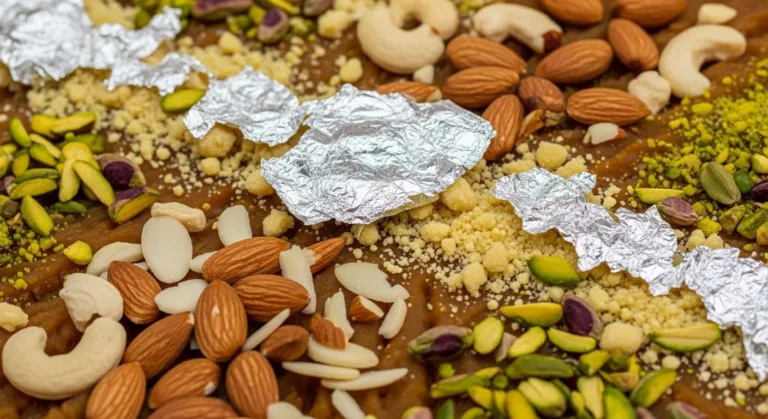
The final product is poured into trays, allowed to cool slightly, and often garnished with nuts like pistachios, almonds, or cashews. Some versions are even decorated with edible silver foil called vark, making it look fancy enough for a king’s feast! The whole process can take well over an hour and requires constant attention, which is why authentic Multani halva commands respect and a premium price.
Multani Halva in Modern Times: Keeping Tradition Alive
In today’s world of instant gratification and fast food, you might think traditional sweets like Multani halva would disappear. Surprisingly, it’s more popular than ever! While the recipe has remained largely unchanged for generations, the way it’s shared and sold has definitely evolved with the times.
Modern halva shops in Multan have become tourist destinations, with people traveling specifically to buy authentic halva from famous, generations-old shops. These shops often have viewing windows where you can watch the halva makers at work, stirring those massive pots with long wooden paddles. It’s become quite the spectacle, kind of like watching candy makers at old-fashioned sweet shops!
The digital age has also opened new doors for Multani halva. Websites like MultanFarms.com are helping to bring authentic products from Multan to people all over Pakistan and even internationally. This means you don’t have to travel to Multan to taste authentic halva anymore, though visiting the city to experience it fresh is still considered the ultimate treat! These platforms connect traditional artisans with modern consumers, preserving centuries-old techniques while making them accessible to new generations.
Why Food Traditions Like This Matter
You might be thinking, “Okay, it’s a delicious dessert, but why all the fuss about tradition?” Here’s the thing: foods like Multani halva are more than just something sweet to eat. They’re edible pieces of history! Every time someone makes halva using the traditional method, they’re keeping alive techniques and knowledge that have been passed down through families for hundreds of years.
These food traditions also connect people to their culture and heritage. For someone from Multan, halva might remind them of their grandmother’s kitchen or special celebrations from childhood. For others, trying authentic Multani halva is like taking a delicious trip through history, tasting something that people enjoyed centuries ago, made essentially the same way. It’s pretty amazing when you think about it, this dessert has survived empires rising and falling, technology revolutionizing the world, and countless other changes!
Plus, there’s something special about food made with care, skill, and tradition rather than pumped out by machines in a factory. When you eat authentic Multani halva, you’re tasting the result of someone’s expertise and dedication. That wooden paddle stirring for over an hour? That’s a person doing that, not a machine. The judgment call about when it’s perfectly done? That comes from years of experience, not a timer.
Your Invitation to Taste History
So there you have it, the story of Multani halva! From its origins in one of Pakistan’s oldest cities to its status as a beloved national treasure, this sweet treat has earned its reputation through centuries of perfection. It’s a dessert that refuses to compromise, requiring time, skill, and top-quality ingredients to get right.
Whether you’re someone who loves trying new foods, a history buff interested in cultural traditions, or just someone with a serious sweet tooth, Multani halva offers something special. It’s a reminder that some things, like authentic traditional recipes, are worth the extra effort and patience they require. In a world where we can get almost anything instantly, there’s something refreshing about a food that can’t be rushed or faked.
Next time you have the chance to try authentic Multani halva, remember that you’re not just eating a dessert. You’re tasting history, experiencing centuries of culinary tradition, and enjoying something that has brought joy to countless people over the years. Pretty cool for a sweet treat, right?
Here’s something to think about: In a world that’s constantly changing and speeding up, what other traditional foods and recipes should we work to preserve? What might we lose if we don’t pass these skills and traditions to the next generation?