Have you ever crunched into a perfectly cooked piece of bhindi (that’s okra!) and wondered where it comes from? Well, here’s something cool: okra doesn’t just magically appear in the vegetable market. Someone had to plant it at exactly the right time to make sure it grows healthy and strong. And if you live in Pakistan or you’re just curious about farming, knowing when to plant okra can make the difference between a garden full of delicious vegetables and a disappointing crop. Whether you’re helping your family with a kitchen garden or you’re interested in farming, understanding okra sowing time is super important. Let’s dive into everything you need to know!
Why Timing Matters When Planting Okra
Think about wearing a heavy winter jacket in the middle of summer. You’d be sweating and uncomfortable, right? Plants feel the same way about weather! Okra is a warm-weather vegetable, which means it loves heat and sunshine. If you plant it when it’s too cold, the seeds won’t sprout properly, kind of like trying to wake up on a freezing Monday morning. The seeds just won’t want to “get up” from the soil!
In Pakistan, we’re lucky because our climate is perfect for growing okra. But timing is everything. Plant too early, and cold temperatures might damage your seedlings. Plant too late, and the extreme summer heat might stress your plants before they’re strong enough to handle it. It’s all about finding that sweet spot where the weather is warm but not scorching hot yet.
The Perfect Okra Planting Season in Pakistan
Here’s the golden rule for okra in Pakistan: the best time to sow okra seeds is from February to March and again from July to August. Let me break down why these months are perfect.
During February and March, Pakistan’s winter cold is fading away, and temperatures start climbing to a comfortable range. The soil begins warming up, which is exactly what okra seeds need to germinate (that’s the fancy word for when seeds start sprouting). Think of it like waiting for your bath water to reach the perfect temperature before jumping in!
The second planting window, July to August, is for areas where the extreme summer heat has started cooling down a bit. This gives you another chance to grow okra that will produce vegetables in the autumn months. It’s like getting a bonus round in your favorite video game!
Understanding Pakistan’s Climate Zones
Pakistan isn’t just one big chunk of land with the same weather everywhere. Different regions have different climates, and that affects when you should plant okra. Let’s break it down by area.
Punjab and Sindh regions (including cities like Multan, Lahore, and Karachi) are generally warmer. In these areas, you can start planting okra as early as mid-February. The soil warms up faster here, so your seeds will be happy sprouting. Multan, known for its hot climate, is actually famous for producing excellent okra because the warm weather creates perfect growing conditions.
Northern areas and higher elevations need to wait a bit longer. If you’re in places like Islamabad or areas near the mountains, hold off until late March or even early April. Why? Because these regions experience cooler temperatures for longer periods, and okra really dislikes cold soil.
Balochistan has its own unique climate. Depending on which part you’re in, you might follow the Punjab timeline or wait a bit longer like the northern areas. The key is to know your local weather patterns.
Getting Your Seeds Ready for Success
You can’t just toss okra seeds into the ground and hope for the best. Well, you could, but you probably won’t get great results! Here’s how to prepare your seeds properly.
First, it’s a good idea to soak your okra seeds in water for about 12 to 24 hours before planting. This softens the hard outer shell and helps the seeds germinate faster. It’s like giving them a head start in a race! Some farmers in Pakistan add a tiny bit of cow dung water to the soaking process because it provides natural nutrients that boost seed health.
Next, make sure your soil is ready. Okra loves well-drained soil that’s rich in organic matter. Mix in some compost or old manure a couple of weeks before planting. The soil temperature should be at least 15-20°C (that’s about 60-68°F) for the best germination. You can actually feel the soil with your hand, if it feels warm and comfortable to touch, it’s probably ready!
Planting Your Okra: Step by Step
Now for the fun part! Here’s how to actually plant your okra seeds.
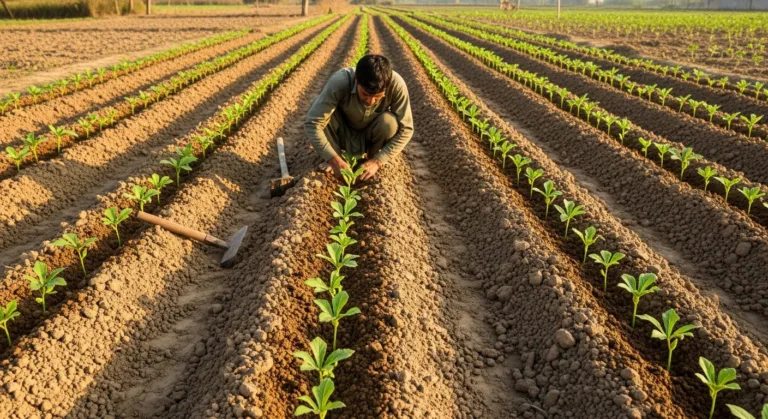
Make small holes or furrows (that’s just a fancy word for long, shallow trenches) in your prepared soil. The holes should be about 2 to 3 centimeters deep. Drop 2 to 3 seeds in each hole, spacing them about 30 to 45 centimeters apart. Why plant multiple seeds? Because not all seeds will sprout, so this gives you backup options. It’s like having spare batteries for your remote!
Cover the seeds gently with soil and water them well. But here’s the important part: don’t flood them! Okra seeds need moisture to germinate, but too much water can make them rot. Think of it like watering a houseplant, you want the soil damp, not drowning.
Within 7 to 14 days, you should see tiny green shoots poking through the soil. That’s your okra saying hello! Once the seedlings have 2 to 3 true leaves (the leaves that look like actual okra leaves, not the first baby leaves), you can thin them out. Keep only the strongest seedling in each spot and gently remove the others.
Taking Care of Your Growing Okra
Your work isn’t done once the seeds are in the ground! Okra plants need regular care to produce lots of delicious vegetables.
Watering is crucial, especially during Pakistan’s hot months. Water your okra plants every 2 to 3 days, or daily if it’s extremely hot. The soil should stay consistently moist but never waterlogged. Early morning is the best time to water because it gives plants all day to use the moisture before the cool night arrives.
Fertilizing helps your plants grow strong and produce more okra. After about 3 to 4 weeks, you can add some balanced fertilizer or compost around the base of your plants. Many Pakistani farmers use natural options like well-rotted cow manure or compost tea.
Watch out for pests and diseases too. Okra can sometimes attract aphids (tiny bugs) or develop fungal diseases if conditions are too humid. Keep your garden clean, remove any dead leaves, and if you spot problems early, they’re easier to fix.
Harvesting Your Okra Bounty
After all your hard work, the most exciting part arrives: harvest time! Okra typically starts producing vegetables about 50 to 60 days after planting. You’ll know they’re ready when the pods are about 7 to 10 centimeters long. They should be bright green and tender.
Here’s a pro tip: harvest your okra every 2 to 3 days. The more you pick, the more the plant produces! It’s like the plant gets encouraged to keep making more vegetables. If you leave the pods on the plant too long, they become tough and fibrous, nobody wants to eat that!
Why Multan and Similar Regions Excel at Okra Growing
Places like Multan in Pakistan have become famous for their okra production, and there’s a good reason why. The combination of hot, sunny days, warm nights, and experienced farmers creates the perfect recipe for success. Farmers in these regions have perfected the timing and techniques over generations, learning exactly when to plant and how to care for their crops.
If you’re learning from resources like Multanfarms.com, you’re tapping into this wealth of local knowledge. Understanding your specific region’s climate patterns makes all the difference in growing successful okra crops.
Wrapping It All Up
Growing okra in Pakistan isn’t rocket science, but it does require knowing the right planting times and following some basic care guidelines. Remember, February to March and July to August are your prime planting windows, though exact timing depends on where you live. Prepare your seeds properly, plant them in warm soil, and give them consistent care with water and nutrients.
Whether you’re growing okra for your family’s kitchen or exploring farming as a potential interest, there’s something incredibly satisfying about watching tiny seeds transform into productive plants. Plus, you’ll gain a whole new appreciation for that bhindi on your dinner plate!
So, are you ready to try growing your own okra? What’s stopping you from starting your own little okra patch this planting season?