Have you ever stopped to think about where your chicken nuggets, eggs, or that delicious fried chicken comes from? It’s pretty wild when you realize that before landing on your plate, these foods started their journey at a poultry farm somewhere. And if you’re in Pakistan, there’s a really good chance that journey began in Multan! This ancient city, famous for its beautiful shrines and sweet mangoes, has another claim to fame that might surprise you. It’s become one of the biggest centers for poultry farming in the entire country.
Multan isn’t just raising a few chickens in backyard coops. We’re talking about a massive industry with thousands of farms, millions of birds, and a whole network of businesses that make it all work together. From tiny chicks hatching in incubators to full-grown chickens ready for the market, Multan handles it all. The city has earned its reputation as a true poultry hub, which basically means it’s like the headquarters or central station for chicken and egg production in the region.
So why did Multan become such a big deal in the poultry world? What makes this city so special for raising chickens? And how does this whole industry actually work? Get ready to discover the fascinating world of poultry farming in Multan, and trust me, you’ll never look at your breakfast eggs the same way again!
What Exactly Is a Poultry Hub?
Let’s start with the basics. When we say “poultry,” we’re talking about birds raised for their meat or eggs, mainly chickens, but also turkeys, ducks, and quail. A poultry hub is a place where everything related to poultry farming comes together. Think of it like a shopping mall, but instead of stores, you’ve got farms, hatcheries (places where eggs are hatched), feed mills (factories that make chicken food), processing plants, and markets all working in the same area.
Multan has become this kind of central spot for several reasons. The city has the perfect climate, warm but not too extreme, which chickens actually love. It’s got great access to water and transportation routes, making it easy to move products in and out. Plus, there’s a long tradition of farming in the region, so people already had the knowledge and experience to make poultry farming successful.
What makes Multan really stand out is how everything connects. A farmer might buy baby chicks from a local hatchery, feed them with grain from a nearby feed mill, and then sell the grown chickens to a processing plant just down the road. It’s like a well-oiled machine where every part works together. This is way more efficient than if each farm had to get supplies from different cities or provinces!
How Did Multan Become a Poultry Powerhouse?
Multan’s journey to becoming a poultry hub didn’t happen overnight. It actually started several decades ago when a few smart farmers realized that raising chickens could be more profitable than some traditional crops. In the 1970s and 1980s, modern poultry farming techniques started spreading across Pakistan, and Multan was perfectly positioned to take advantage.
The city sits in the heart of Punjab province, which is Pakistan’s agricultural heartland. Farmers here had access to lots of grain like corn and wheat, which are the main ingredients in chicken feed. It’s kind of like opening a pizza restaurant right next door to a cheese factory, you’ve got your main ingredient right there! This made it cheaper and easier to raise chickens compared to other regions.
As more farmers jumped into poultry farming, support businesses started popping up too. Companies began building feed mills in Multan to serve all these farms. Veterinary clinics opened to keep the birds healthy. Equipment suppliers set up shop to sell everything from incubators to automated feeding systems. Before long, Multan had created its own poultry ecosystem, where every business helped the others succeed. It’s similar to how Silicon Valley became the tech hub because tech companies, investors, and talented workers all gathered in one place.
What Makes Multan’s Poultry Industry Tick?
So what does a typical day look like in Multan’s poultry industry? Let’s break it down, because it’s way more interesting than you might think! The industry has several different parts that all work together like pieces of a puzzle.
First, you’ve got the hatcheries. These are temperature-controlled facilities where fertilized eggs are carefully incubated (kept warm) until baby chicks hatch. Modern hatcheries in Multan can produce hundreds of thousands of chicks every week! The chicks are then sold to farmers who raise them either for meat (called broilers) or for laying eggs (called layers). It’s like a nursery, but for chickens instead of human babies.
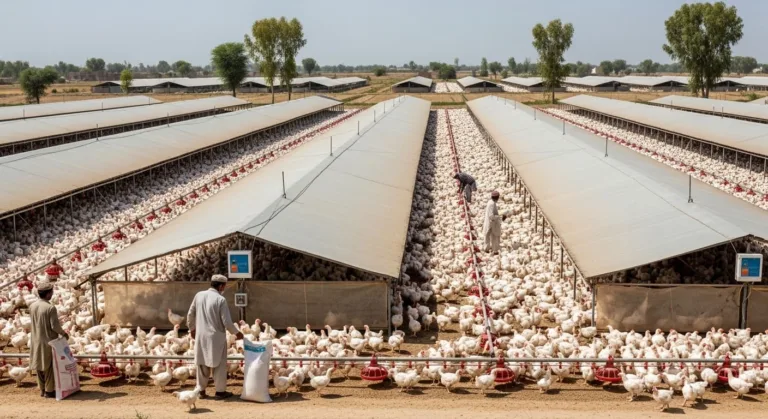
Next come the farms themselves. Multan has thousands of poultry farms ranging from small family operations with a few hundred birds to massive commercial farms with 50,000 chickens or more! These farms use modern technology like automatic feeders, climate control systems, and even sensors that monitor the birds’ health. Farmers have to be super careful about things like temperature, ventilation, and cleanliness because chickens are actually pretty sensitive creatures.
Then there are the feed mills. Chickens can’t just eat whatever they find, they need a balanced diet with the right mix of proteins, vitamins, and minerals to grow healthy and strong. Feed mills in Multan create special chicken food formulas, kind of like how your cereal is fortified with vitamins. These mills process tons of grain every single day to keep all those millions of chickens fed.
Finally, you’ve got the processing and marketing side. When chickens are ready, they go to processing facilities where they’re prepared for sale. From there, the meat and eggs get distributed to markets, grocery stores, and restaurants all across Pakistan. Some products even get exported to other countries! It’s amazing how Multan’s chickens can end up on dinner tables hundreds or even thousands of miles away.
Why Does This Matter for Multan and Pakistan?
You might be wondering why we should care about all these chickens running around Multan. Well, here’s the thing: the poultry industry is actually a huge deal for Pakistan’s economy. It provides jobs for tens of thousands of people, from farm workers to truck drivers to scientists who develop better farming methods. In Multan alone, the poultry sector employs thousands of families and contributes billions of rupees to the local economy every year.
Poultry farming also plays a critical role in food security, which is a fancy way of saying it helps make sure people have enough to eat. Chicken and eggs are affordable sources of protein for millions of Pakistani families. As the country’s population grows, we need more food, and the poultry industry helps meet that demand. It’s kind of like how farmers growing wheat help ensure everyone has bread to eat, except with protein instead of carbs.
There’s also an educational aspect. Agricultural universities and research centers in and around Multan study poultry farming to make it more efficient and sustainable. Students learn modern farming techniques that they can use to start their own businesses or improve existing farms. This knowledge gets passed down and shared, making the whole industry better over time. It’s like how your teachers share knowledge with you so you can succeed in the future!
What Challenges Does the Poultry Hub Face?
Running a huge poultry industry isn’t all sunshine and rainbows. Multan’s poultry farmers face some serious challenges that they have to deal with every single day. One of the biggest issues is disease outbreaks. When you have millions of birds living in close quarters, illnesses can spread super fast. Diseases like bird flu can wipe out entire flocks and cost farmers huge amounts of money. That’s why biosecurity (keeping germs out) is so important, and farmers have to follow strict rules about cleaning and vaccinating their birds.
Another challenge is the cost of supplies. Chicken feed prices go up and down depending on grain harvests and international markets. When feed gets expensive, it squeezes farmers’ profits because they have to spend more to raise each chicken. Imagine if the price of school lunch suddenly doubled, you’d probably feel the pinch in your allowance! Farmers feel the same way when their costs rise unexpectedly.
Climate issues are becoming a bigger concern too. Extreme heat waves can stress chickens and even kill them if farms don’t have proper cooling systems. Water shortages can also be a problem during dry seasons. And let’s not forget about electricity, many modern poultry operations need reliable power to run their equipment, but power outages can put birds at risk. These are real problems that farmers have to solve creatively, like installing backup generators or better insulation in chicken houses.
The Future of Multan’s Poultry Industry
So where is all this headed? What does the future hold for Multan as a poultry hub? Actually, the outlook is pretty exciting! More and more farms are adopting smart farming technologies. This includes things like sensors that monitor temperature and humidity automatically, apps that help farmers track their flocks’ health, and even artificial intelligence that can predict problems before they happen. It’s like giving farmers superpowers to take better care of their chickens!
There’s also growing interest in organic and free-range poultry. Some consumers want chickens that are raised more naturally, with access to outdoor spaces and organic feed. While this is still a small part of the market, it’s growing, and some Multan farmers are starting to explore these options. It’s similar to how some people prefer organic vegetables from farmers’ markets instead of regular supermarket produce.
Export opportunities are expanding too. Pakistani poultry products are gaining recognition for their quality, and there’s potential to sell more to countries in the Middle East, Central Asia, and beyond. This could mean even more growth and jobs for Multan’s poultry sector. Imagine Multan’s chickens becoming famous worldwide, that would be pretty cool, right?
Why Should You Care About Multan’s Poultry Hub?
You might live nowhere near Multan and think this doesn’t affect you, but here’s the thing: understanding where our food comes from connects us all. Whether you’re eating chicken karahi at a restaurant, having an omelet for breakfast, or grabbing chicken shawarma from a street vendor, there’s a good chance that food’s journey started at a poultry farm, possibly in Multan.
Knowing about agricultural hubs like Multan helps us appreciate the hard work that goes into feeding millions of people. Those farmers waking up before dawn to check on their flocks, the workers at feed mills, the truck drivers transporting products, they’re all part of a system that keeps food on our tables. That’s worth thinking about next time you enjoy a meal!
Plus, Multan’s success story shows how a city can build an entire industry from scratch through smart planning, hard work, and cooperation. It’s inspiring to see how a place can become known for something and create opportunities for so many people. So next time someone asks you about Multan, you can tell them it’s not just the City of Saints, it’s also the poultry hub that helps feed Pakistan! What other cities or regions do you know that are famous for producing specific things? Have you ever thought about what your own hometown is known for?