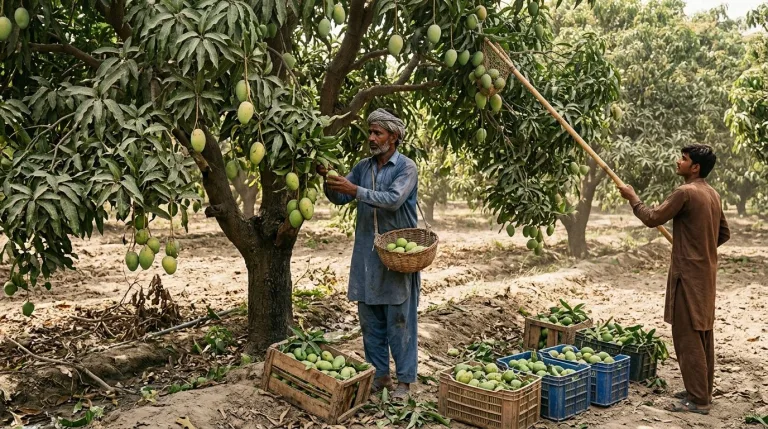
Picture this: it’s a hot summer afternoon in South Punjab, and the air smells sweet. Not like flowers or perfume, but like ripe, juicy mangoes. Crates are stacked on trucks, farmers are climbing ladders, and kids are wiping golden juice off their chins. Welcome to the city of mango.
If you’ve heard people call Multan the “City of Mango,” you might be wondering where the nickname came from. Is it just a fun title, or is there something special going on in the soil, the weather, and the farms around this old city? Let’s dig in.
So, What Makes Multan the City of Mango?
Multan has earned its nickname because mango farming is a huge part of life here. Thousands of acres around the city are filled with mango orchards, which are large farms where rows of mango trees grow together. When summer comes, those trees are loaded with fruit.
Think of it like a school famous for its football team. Everyone in town knows about it, and a lot of people are involved. Mangoes are Multan’s team, and they’re champions.
Multan is also known as the “City of Saints” because of its beautiful old shrines. But walk through the countryside in June, and you’ll quickly see why mangoes have their own spot in the city’s story.
The Secret Recipe: Weather and Soil
Mango trees are a bit like picky eaters. They only grow their best when the conditions are just right, and Multan happens to serve exactly what they love.
- Long, hot summers: Mangoes love heat. The strong sunshine helps the fruit build up natural sugar, which is why a Multani mango tastes so sweet.
- Dry weather at the right time: Too much rain while trees are flowering can ruin the crop. Multan’s dry spring helps the blossoms turn into fruit.
- Rich, fertile soil: The land near the Chenab River is soft and full of nutrients, a bit like a well-stocked pantry for the roots.
- Water from canals: Farmers use canals to give trees a drink when they need it.
Put all that together, and you get fruit that’s big, juicy, and packed with flavor.
Meet the Famous Mango Varieties
Here’s the fun part. There isn’t just one kind of mango. There are many varieties, which is just a fancy word for different types, like how apples come as red, green, or golden. Multan’s farms grow some real superstars:
- Chaunsa: Often called the king of mangoes. It’s super sweet, smooth, and has a honey-like taste. Many people say it’s the best mango they’ve ever eaten.
- Sindhri: A large, golden mango that shows up early in the season. It’s juicy and has very little fiber, so you won’t get stringy bits stuck in your teeth.
- Anwar Ratol: A small mango with a big personality. It has a strong, lovely smell and a sugary taste.
- Langra: Stays green even when it’s ripe, which surprises a lot of people. It has a tangy-sweet flavor.
Did you know a mango tree can live for over a hundred years? Some old trees have been giving fruit to families for generations. Imagine your great-grandparents eating mangoes from the same tree you’re picking from today!
From Tiny Flower to Juicy Fruit
How does a mango actually grow? It’s a pretty cool journey.
It starts in late winter and early spring, when the trees get covered in tiny blossoms, which are small flowers in clusters. Bees and other insects visit them and help turn some of those flowers into baby mangoes. Not every flower makes it, though. Only a small number become fruit, which is why farmers keep their fingers crossed for good weather.
Over the next few months, the little green fruits swell up like balloons. By late May and June, the first varieties are ready. The season keeps rolling through July and August, so there’s a mango for almost every week of summer.
A Day in the Life of a Mango Farmer
Being a mango farmer isn’t a lazy job. Picking happens by hand, and it takes a trained eye. A farmer has to know exactly when a mango is ready, because too early means sour and too late means mushy.
After picking, the mangoes are sorted by size and quality. Then they’re carefully packed into boxes so they don’t bruise. Think of it like packing eggs for a long trip. One rough bump, and the fruit can spoil.
This is also why buying from trusted farms matters. When the fruit travels straight from the orchard to your home, it stays fresher and tastes the way nature meant it to.
Why Does It All Matter?
Mangoes aren’t just yummy. They’re a big deal for Pakistan too. The country is one of the world’s top mango producers, and Pakistani mangoes are shipped to many countries across the globe. That means farmers in places like Multan are helping bring a taste of Pakistan to dinner tables far away.
Mangoes are healthy, too. They’re full of vitamin C, which helps your body fight off colds, and vitamin A, which is good for your eyes. So the next time someone tells you to eat your fruit, a mango makes that pretty easy.
Wrapping It Up
So, why is Multan called the city of mango? It’s the perfect mix of sunshine, rich soil, river water, and hardworking farmers who’ve been growing amazing fruit for generations. Add famous varieties like Chaunsa and Sindhri, and it’s easy to see why the title fits.
The next time you bite into a sweet, juicy mango, stop for a second and think about its journey. It started as a tiny blossom, grew under the Multan sun, and was picked by hand just for you. If you could create your very own mango variety, what would you name it, and how would it taste?
Want to taste the magic for yourself? Explore fresh, farm-grown goodness at Multanfarms.com.