Have you ever cracked open an egg for breakfast and wondered where it came from? Sure, you know it came from a chicken, but have you ever thought about how one chicken can lay an egg almost every single day? It’s actually pretty amazing when you think about it. Unlike wild birds that might lay just a few eggs per year, the chickens raised for egg production, called layer chickens, are like little egg-making machines!
Layer chicken egg production is a fascinating process that combines science, careful farming, and a lot of planning. Whether you’re eating scrambled eggs, baking cookies, or enjoying a fluffy omelet, those eggs probably came from a layer farm like Multanfarms.com. Understanding how these farms work can help you appreciate your breakfast a whole lot more. Plus, it’s just really cool to learn about how farmers create the perfect conditions for chickens to stay healthy and productive.
What Makes a Layer Chicken Different?
Not all chickens are created equal. There are basically two main types of chickens raised on farms: meat chickens (called broilers) and egg-laying chickens (called layers). Think of it like this: if chickens were basketball players, broilers would be the power forwards built for size and strength, while layers would be the point guards built for speed and consistency.
Layer chickens are special breeds that have been specifically raised to produce lots of eggs. The most common type you’ll find on farms is the White Leghorn, which can lay around 280 to 320 eggs per year. That’s almost one egg every single day! These chickens are lighter and smaller than meat chickens because their bodies focus energy on making eggs instead of building muscle.
What’s really interesting is that a layer hen starts producing eggs when she’s about 18 to 20 weeks old (that’s around 4 to 5 months). She’ll keep laying eggs regularly for about two years before her production starts to slow down. During her peak laying time, she’s basically an egg-producing superstar!
The Secret Recipe for Perfect Egg Production
You might think that chickens just naturally lay eggs without much help, but the truth is that farmers need to create the perfect environment for this to happen. It’s kind of like how you need the right ingredients and conditions to bake the perfect chocolate chip cookies.
Nutrition is super important. Layer chickens need a special diet that’s packed with protein, calcium, and other nutrients. The calcium is especially crucial because eggshells are made of calcium carbonate. Imagine trying to build a house without bricks, that’s what it would be like for a chicken trying to make eggs without enough calcium! Farmers carefully measure out feed that includes grains like corn and soybeans, plus vitamin and mineral supplements.
Lighting plays a huge role too. Here’s something weird: chickens need about 14 to 16 hours of light each day to keep laying eggs consistently. In nature, chickens would lay fewer eggs during winter when days are shorter. Modern layer farms use artificial lighting to trick the chickens’ bodies into thinking it’s always the perfect time of year for laying eggs. It’s like having endless summer!
Temperature also matters. Chickens are most comfortable and productive when the temperature is between 65 and 75 degrees Fahrenheit. Too hot or too cold, and their egg production can drop. That’s why farms like Multanfarms.com invest in proper ventilation and climate control systems.
A Day in the Life of a Layer Chicken
So what does a typical day look like for these egg-laying champions? Let’s walk through it.
Most layer chickens wake up when the lights come on in the morning (or when the sun rises if they’re on a free-range farm). They’ll start their day by eating breakfast from their feeders and drinking fresh water. Hydration is super important because eggs are about 74% water!
Throughout the day, hens will eat, drink, socialize with other chickens, and eventually feel the urge to lay an egg. Here’s a cool fact: it takes about 24 to 26 hours for a chicken to form a complete egg inside her body. The process is pretty complex, starting with the yolk forming in the ovary, then moving through the oviduct where the egg white and shell are added layer by layer.
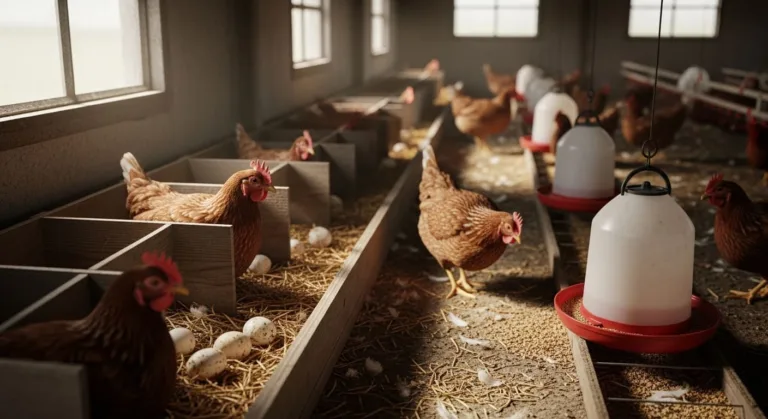
When a hen is ready to lay, she’ll usually look for a quiet, comfortable nesting box. In modern layer farms, these are specially designed areas where chickens feel safe and secure. After laying her egg, she’ll make a proud announcement with some clucking (because who wouldn’t want to brag about such an accomplishment?), and then go back to her daily routine.
How Farms Collect and Handle Eggs
Once those eggs are laid, they need to be collected quickly and carefully. This is where farms use some pretty clever systems.
Many modern layer farms use automated collection systems where eggs gently roll from the nesting boxes onto conveyor belts. These belts transport the eggs to a central area where they’re cleaned, sorted, and packaged. It’s like a factory assembly line, but for breakfast!
The eggs go through a washing process to remove any dirt or bacteria from the shells. Then they’re inspected using bright lights (a process called candling) to check for any cracks or defects. Finally, they’re sorted by size, large, medium, extra-large, and packed into cartons.
From the time an egg is laid to when it arrives at your local grocery store usually takes less than a week. Some farms, like Multanfarms.com, might even sell directly to local customers, meaning your eggs could be just a day or two old when you buy them!
Keeping Layer Chickens Happy and Healthy
You might be wondering if all this egg production is stressful for the chickens. Good farmers know that happy, healthy chickens lay better eggs, so they work hard to keep their flocks in great condition.
Health monitoring is a daily task. Farmers watch for signs of illness, check that all chickens are eating and drinking normally, and make sure there aren’t any bullying problems in the flock (yes, chickens can be mean to each other sometimes!).
Many farms are also moving toward more humane housing systems. While some layer chickens live in cage systems, there’s a growing trend toward cage-free, free-range, and pasture-raised systems where chickens have more space to move around, spread their wings, and engage in natural behaviors like dust bathing and foraging.
Veterinary care is important too. Layer chickens get vaccinated against common diseases, and farmers work with vets to prevent and treat any health issues that pop up.
Why This Matters to You
The next time you’re enjoying eggs for breakfast, you’ll know exactly what went into producing them. Layer chicken egg production is an incredible combination of biology, technology, and farming expertise. It takes dedicated farmers, proper nutrition, careful management, and yes, some pretty amazing chickens to get those eggs from the farm to your table.
Understanding where your food comes from helps you make better choices and appreciate the work that goes into feeding our world. Farms like Multanfarms.com are working every day to produce high-quality eggs while caring for their chickens and the environment.
So here’s a question for you: the next time you crack an egg, will you think about the layer chicken that made it possible? Maybe you’ll even be inspired to learn more about where your other foods come from!